
Published: 17 July 2026 · Updated: 18 July 2026
Why Moisture Testing Matters on a GRP Hull
A fibreglass hull's health report is written in its moisture readings. Taking the measurement correctly is what separates a false alarm from a real risk.
Related service: Osmosis Test →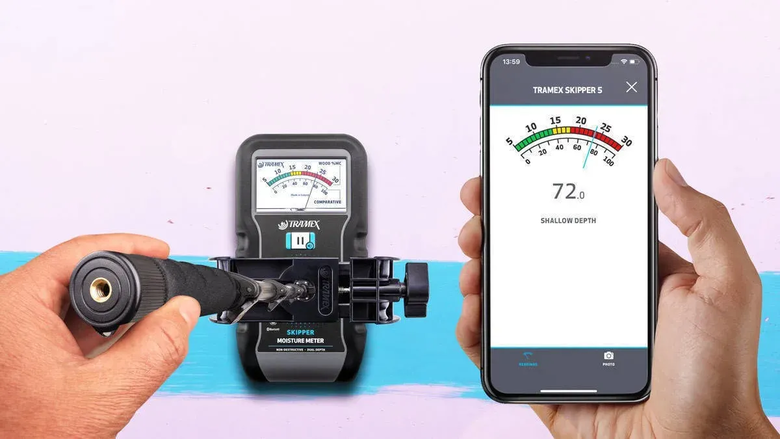
What moisture testing tells you about structure, and what it costs to ignore
Moisture accumulating beneath a bright, smooth gelcoat is a quiet process. It rarely announces itself, and by the time it does the bill can include osmotic blistering, a weakened laminate, a rotted sandwich core, lost structural strength and a serious cut in resale value.
For experienced owners, marina professionals and performance-minded skippers, checking a hull for moisture is not a yes-or-no question. Done properly in the field it demands the right instrument, correct calibration, well-chosen reference points, and the judgement to interpret what comes back.
From my own survey work at YachtSurvey I can say that Turkish conditions distort readings in specific ways: seasonal temperature swings, heavy UV load, boats that stay afloat for most of the year, past repairs done badly, and local maintenance habits. This article sets out how moisture travels through a GRP hull, which values genuinely raise an alarm, the interpretation mistakes I see most often, and how these readings turn into leverage in a purchase, an insurance claim or a refit.
Why this is the most critical step in a structural survey
Moisture testing sits at the centre of a structural survey because the damage does not start where you can see it. It starts deep in the laminate. Below the waterline in particular, moisture travelling under the gelcoat is the clearest early signal of osmotic cell formation, resin hydrolysis, a wetting core, and — further along — delamination.
The classic technical literature makes the mechanism plain: before a blister can form, water must first diffuse into the laminate. My own field experience says the same thing from the other direction — an absence of visible blisters is not, on its own, evidence of low risk. Moisture inside the laminate is the common denominator of structural failure. What we are reading, then, is not the condition of the paint. It is the structural future of the boat.
The mistake of treating a reading as a verdict
The single biggest error I see in advanced surveys is taking the number on the screen as absolute fact. Capacitance meters — the kind that read from the surface — can return falsely high values because of antifoul thickness, metal surfaces on the inside, bilge water, temperature differences, or the sandwich core itself.
As international survey standards and Tramex’s own marine protocols both note, these instruments do not read a water percentage. They read the material’s electrical behaviour, its dielectric response. So the method I use in the field is this: once the boat is ashore, take reference readings from dry areas above the waterline, then map the whole hull on a grid. Anything suspect gets confirmed by percussion hammer, infrared thermography, and where necessary a controlled sample.
Turkish conditions and regional risk
High salinity in the Aegean and Mediterranean, warm water, and boats that spend most of the year afloat all accelerate osmotic activity and moisture diffusion. The same conditions lengthen the time a hull needs ashore to dry out.
In the used market, leisure boats between 2.5 and 24 metres carry high structural expectations under European conformity rules. A moisture finding during a survey should never be waved away. Caught early, the answer is controlled drying and an osmosis barrier coating. Left too long, it stops being cosmetic maintenance and becomes heavy structural repair.
Field data and cost: based on my own survey records and local repair pricing, a neglected osmosis or wet-core repair on a 40-foot boat runs to roughly €5,500, and the drying process alone takes 8 to 12 weeks.
What the readings actually point to
Moisture testing is not a wetness check. It reads the character of damage moving through the laminate. Using a dual-depth instrument such as the Tramex Skipper 5, the difference between roughly 10 mm (shallow mode) and 30 mm (deep mode) penetration is what separates surface moisture from moisture in the core.
| Reading | What it means structurally | Decision in the field |
|---|---|---|
| Uniformly high below the waterline | Widespread osmotic activity, early resin hydrolysis | Plan controlled drying and an epoxy barrier |
| High in one area only | Deck hardware leak, wet core, or delamination | Isolate the leak, repair the sandwich locally |
| Deep mode high, shallow mode low | Moisture has passed the surface and reached the balsa or foam core | Check core crush strength, call for a strength test |
Osmotic pressure begins long before any blister shows under the gelcoat. If it is not identified at that stage, water molecules break down the bond between glass and resin at the interface and local delamination follows.
On balsa- or plywood-cored decks in particular, the first places to look are cleats, stanchion bases, winches and the mast step. A soft feel underfoot is rarely cosmetic — it usually means the core is already gone.
The cross-checks I run before reaching a conclusion
A moisture meter is not a diagnostic instrument on its own. It is a very good screening tool. Before I commit to a finding, I cross-check the readings against these:
-
Percussion testing. A sweep with a survey hammer sorts out delamination and voids quickly. If the meter reads high but the sound stays solid, the problem is surface absorption. If the sound goes dull and hollow, delamination becomes the working assumption.
-
Infrared thermography. Working on thermal variation, it is unmatched for mapping the thermal signature of osmotic damage and hidden water pockets across large areas of hull.
-
Ultrasonic thickness measurement. On glass-reinforced plastic it confirms laminate thickness variation, internal separation and the boundaries of a wet core.
-
Controlled sampling. In critical cases, and only with the owner’s consent, a small core sample settles under the microscope whether the damage is resin hydrolysis alone or irreversible core rot.
Practical advice for buyers and owners
Turkish regulations for recreational craft and the Turkish Lloyd conformity framework provide a legal baseline for new and newly marketed boats. Neither guarantees the current condition of a hull or its history of water ingress in service.
If you are buying
-
Do not trust a single point reading. One high spot does not mean “this boat has osmosis”, and one low reading is not a reason to relax. Insist on a complete moisture map covering the bottom, under the bilge, the frame connections and the transom.
-
Watch the timing. Readings taken as the boat comes out of the water, during washing, or with morning dew still on the hull are worthless. Ionic contamination and salt residue on the surface mislead the instrument. Let the hull stabilise.
If you already own the boat
-
Track the trend. Have moisture measured not once but regularly — at each haul-out, start and end of season. Those photographed records are the strongest document protecting your resale value.
-
Avoid the wrong barrier job. Applying an epoxy osmosis barrier straight onto a wet laminate is the most damaging mistake I see in the field. Covering the problem traps the moisture inside and makes hydrolysis more aggressive, not less.
A moisture reading is not a number, it is a decision matrix
Moisture testing on a fibreglass hull is not a figure to be read off a screen. It is a technical process that drives your purchase decision, your repair budget and the safety of the boat underway.
From my field experience at YachtSurvey: a properly interpreted moisture map is the strongest protection you have against heavy structural costs later. Do not entrust the health of your hull to guesswork or a surface look. Entrust it to grid mapping with calibrated instruments, to international standards, and to a surveyor who can read what the numbers mean.