
Engine Room Survey
The engine room produces most of a boat's failures. Its systems are examined running, under load, with the thermal camera.
- Engine diagnostics — compression (cylinder balance) test, injector test, true running hours, fault history
- The surveyor is also a qualified marine mechanic and master instructor
- An uncommon measurement in yacht surveys in Turkey
- Systems examined under load, not on a stopped engine
- Six instruments — diagnostics, thermal, borescope, UV, hammer, moisture meter
- Report delivered the same day
An engine room survey examines the main engines, generators, shafts, fuel, exhaust and electrical systems while they are running, using non-destructive methods. The engine control unit (ECU) is read and systems are scanned under load with a thermal camera. Field work takes 3-5 hours; the report is delivered the same day.
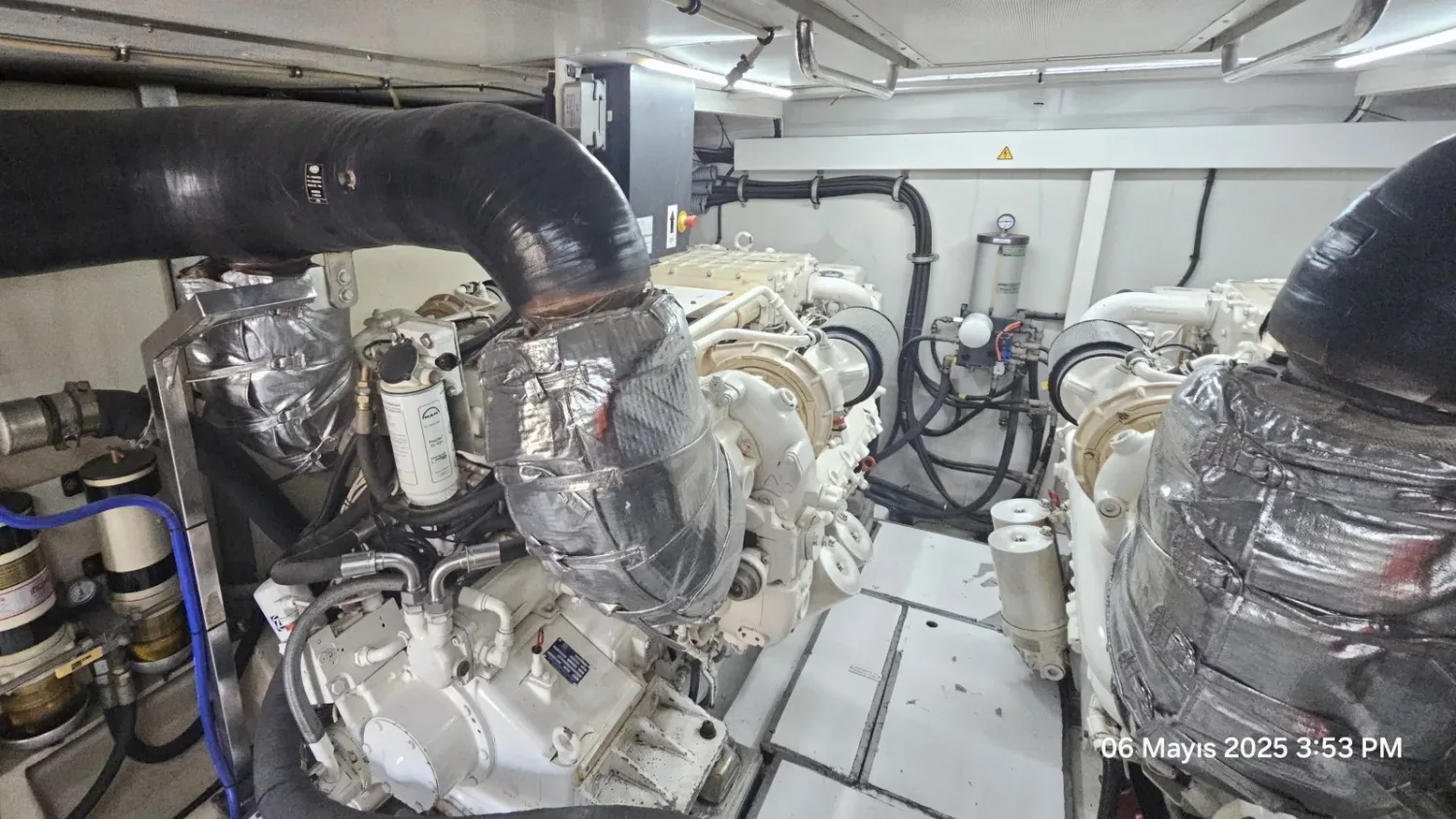
Why the engine room is its own chapter
Most failures a boat produces trace back to the engine room, and they tend to announce themselves at the worst possible moment — underway, far from a harbour. It is the one zone that must be examined with its systems running.
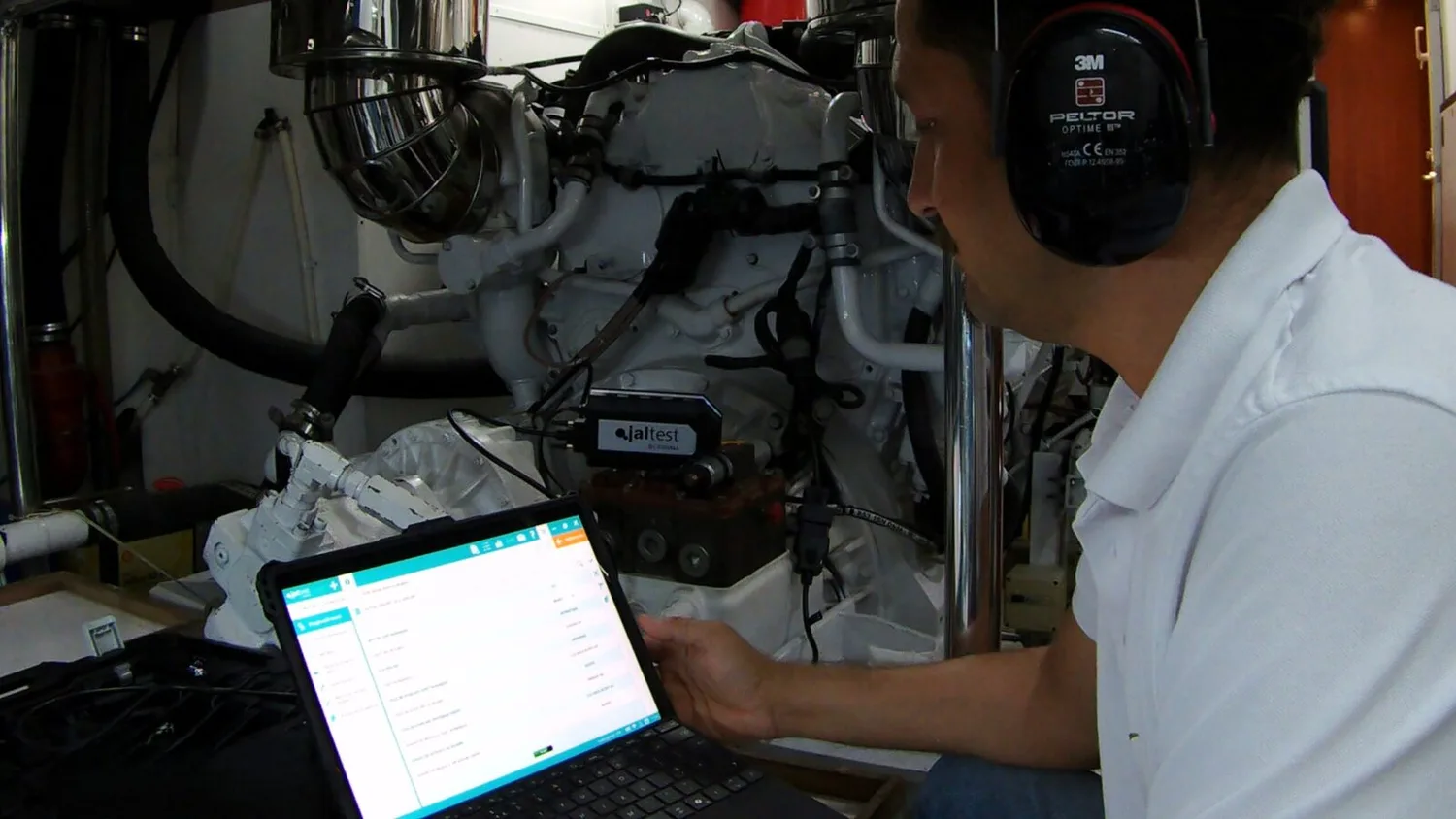
Engine diagnostics — our strongest suit
In most yacht surveys the engine is assessed three ways: the hour meter is read, the hatch is opened, the engine is run for a while and listened to. None of the three reads the engine’s own record.
We connect a diagnostic tool to the engine control unit. This measurement is uncommon in yacht survey reports in Turkey; the surveyor usually has neither the tool nor the engine-side background to interpret it. The person carrying out this survey is also a qualified marine mechanic and master instructor — reading the number the tool gives and knowing what that number means are two different things.
| Measurement | What it tells you |
|---|---|
| Compression / cylinder balance test | Each cylinder’s contribution relative to the others. A weak cylinder points to rings, valves or gasket fatigue — without opening the engine. |
| Injector test | Injector return flow and cylinder contribution. A leaking or late injector shows here before it shows in fuel burn or smoke. |
| True running hours | Total hours and their distribution across rev bands. An engine that lived at full load and one that aged at low revs do not mean the same thing at the same hour count. |
| Fault history | Active and logged fault codes, occurrence counts and the operating conditions at the time. Some cleared codes still leave a counter trace. |
| Overheat and low oil pressure events | How many times the engine went outside its limits. A single overheat changes the remaining life of an engine. |
| Live data | Rail pressure, boost, exhaust and coolant temperatures, fuel rate — under load, in real time. |
| ECU identity and software | Whether the unit has been swapped and whether the software has been updated. |
| Service counters | When the service interval was last reset — compared against the maintenance record. |
Which readings are available depends on the make and age of the engine. The dash panel can be changed; the ECU record stays. Set the vendor’s account, the maintenance book and the engine’s own record side by side and the gap between what is said and what is true becomes visible.
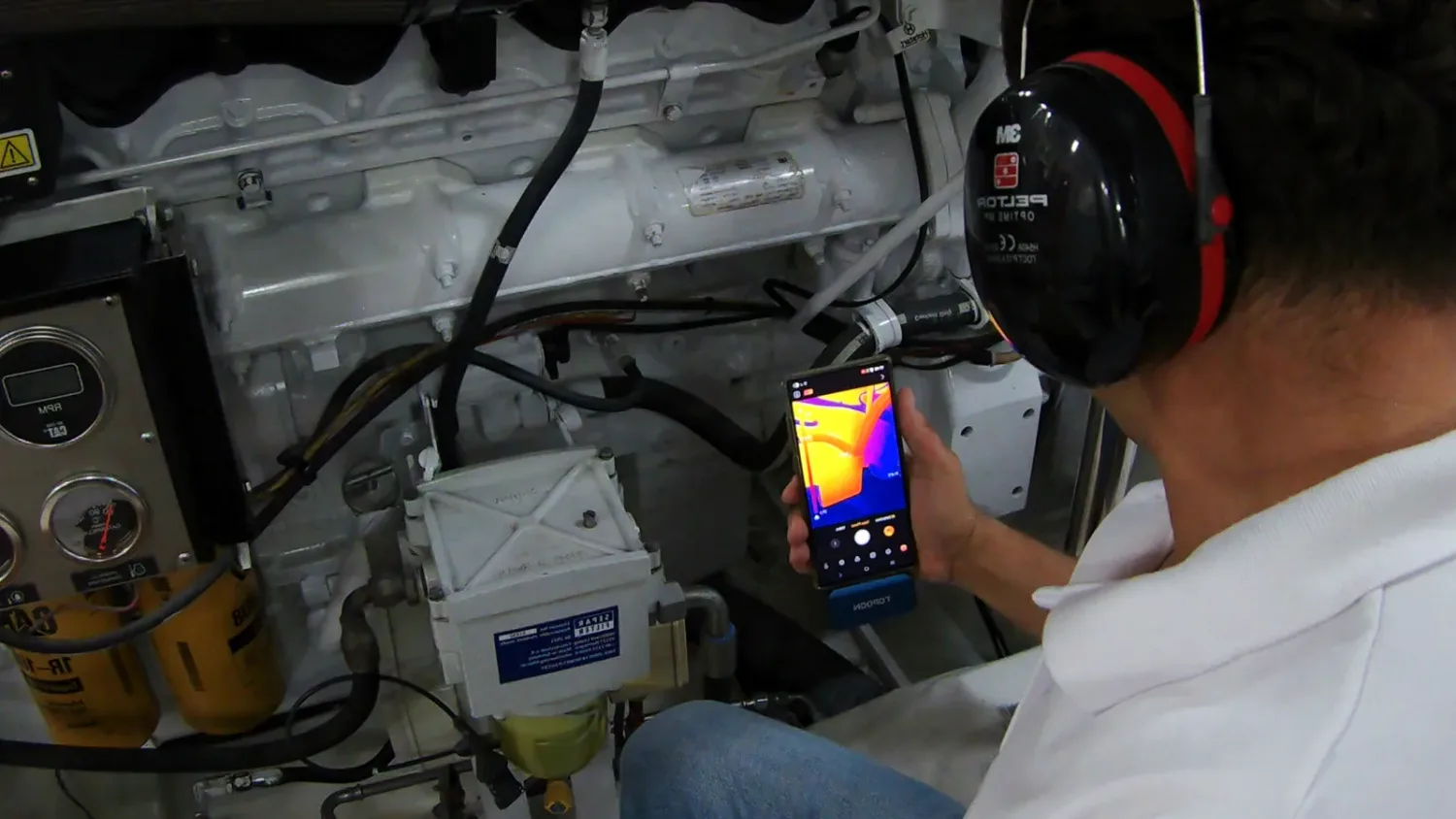
What is examined
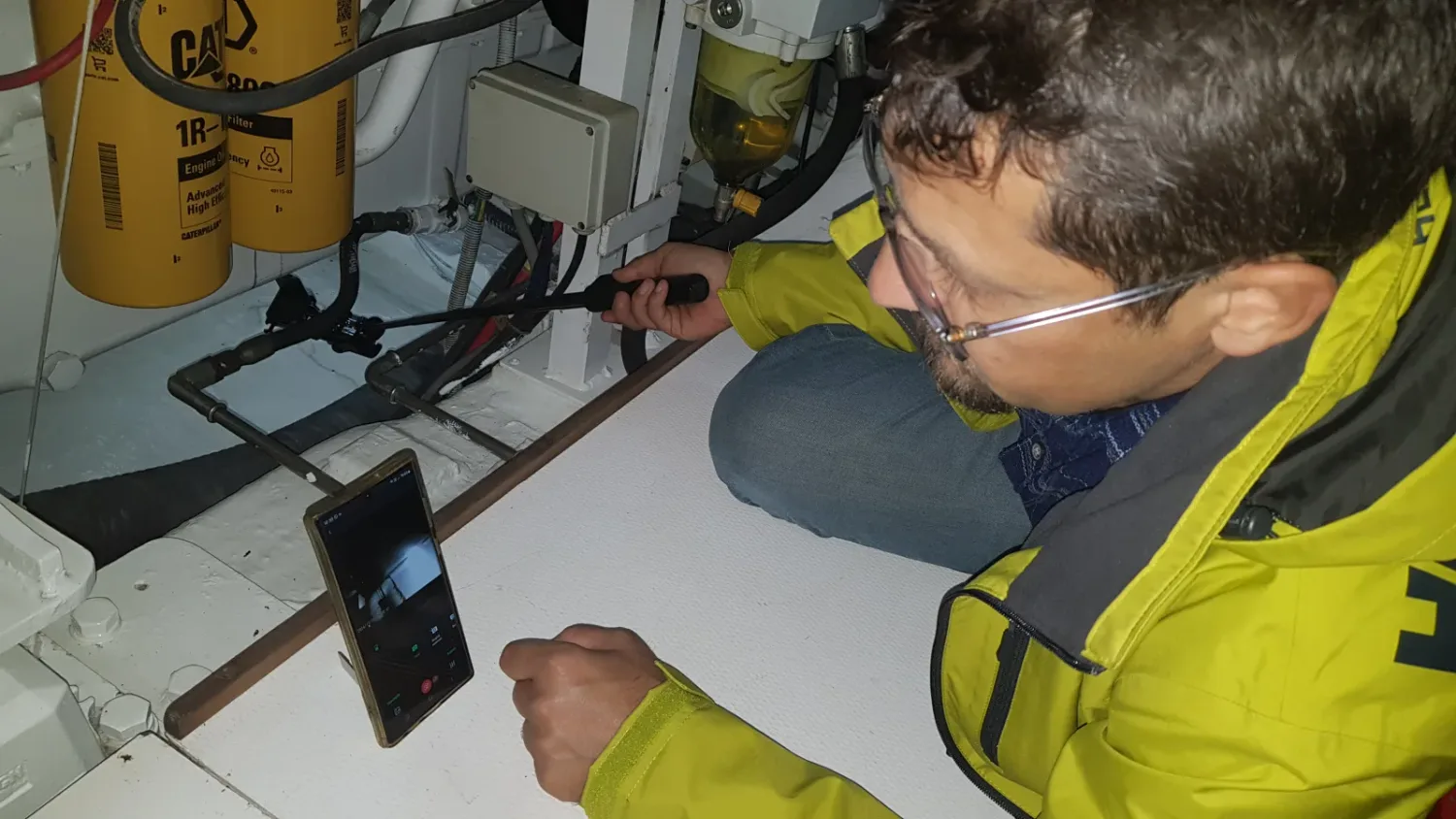
The engine is observed cold and under load, its temperature distribution mapped by thermal camera and abnormal hot spots recorded; gearbox, coupling and shaft alignment checked with vibration noted. The cooling circuit — heat exchanger, raw water pump, impeller, hoses and clamps — is inspected for salt build-up and corrosion. Fuel tanks, vent lines, filters and hose standards are checked with any seepage or sediment recorded. The exhaust run and water lock are scanned under load. Bilge pumps and alarms are tested; the generator is run under load; the battery bank, charger and panel connections are measured against standard cable sizing and fusing.
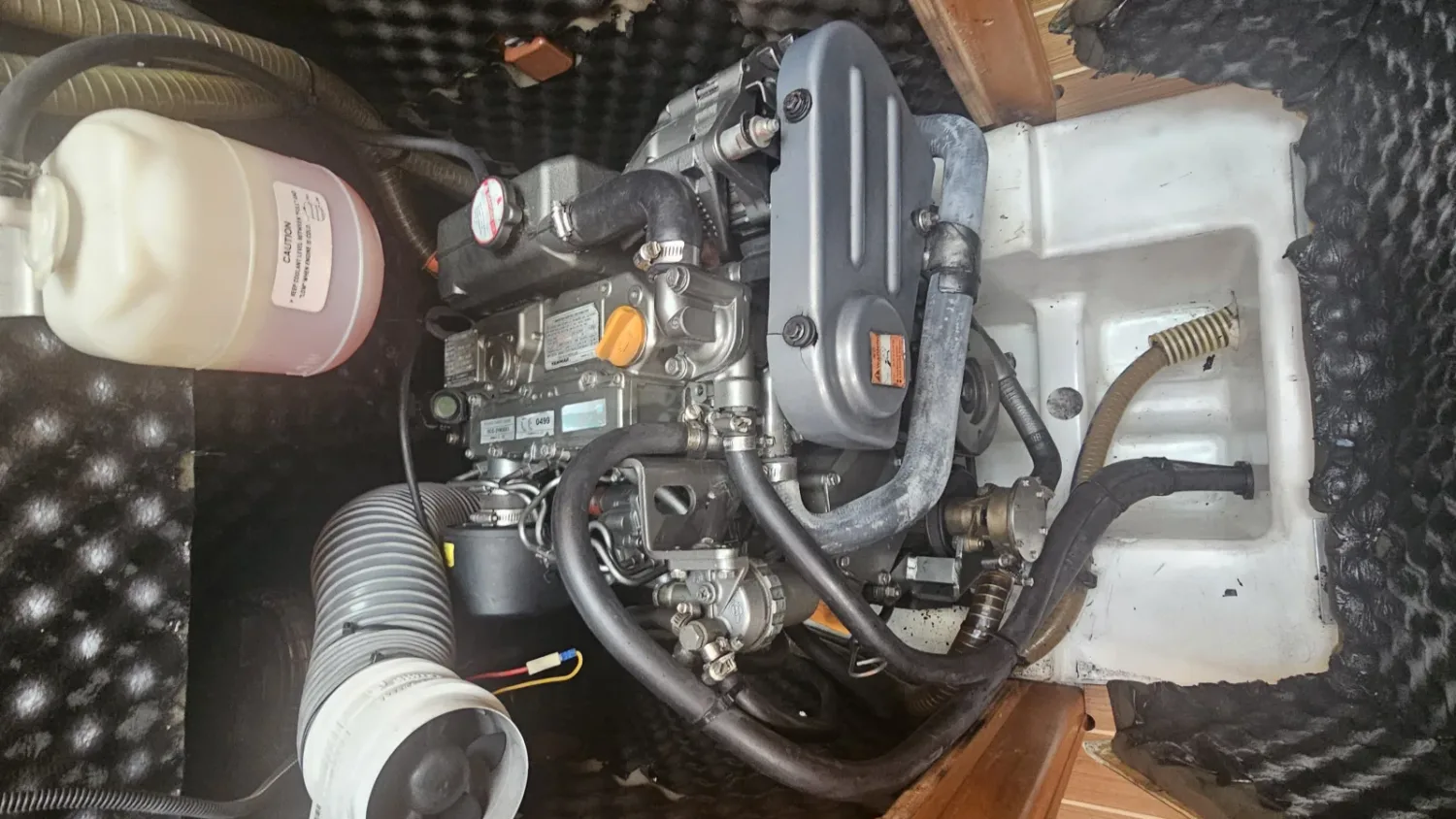
The report
Findings arrive photographed and urgency-classed, with thermal captures for every anomaly and measured values for the electrical system — a service-ready work list as much as a survey document.
Duration and fee
Engine room work takes 3-5 hours, depending on the length of the boat, the number of engines and access.
| Scope | Fee |
|---|---|
| Engine room alone — up to 1000 HP | 200 € / engine |
| Engine room alone — above 1000 HP | 250 € / engine |
| Within a pre-purchase survey | No separate charge — full survey rate 26 €/ft |
On a twin-engine boat with 900 HP per engine, an engine room survey on its own comes to 400 €. Generators are included.
Fees vary with the length of the boat, where she lies and the season. For a firm price call us — tell us about the boat and we will give you the number on the phone.
From the field
What this work looks like on board
8 frames
These frames were taken during real surveys. None of them are stock: each one is a measurement or a check described on this page.
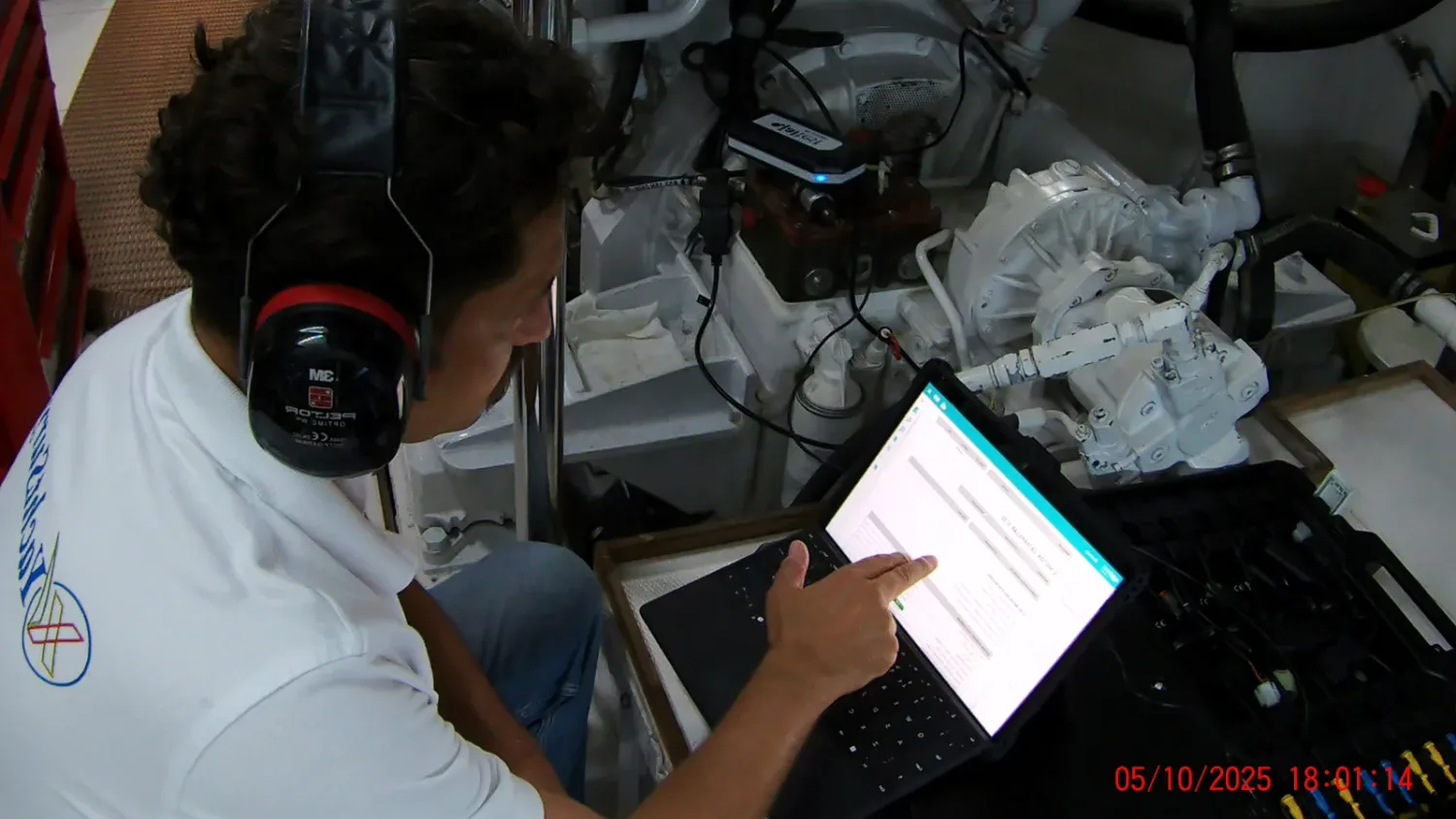
Diagnostic read-out on the laptop 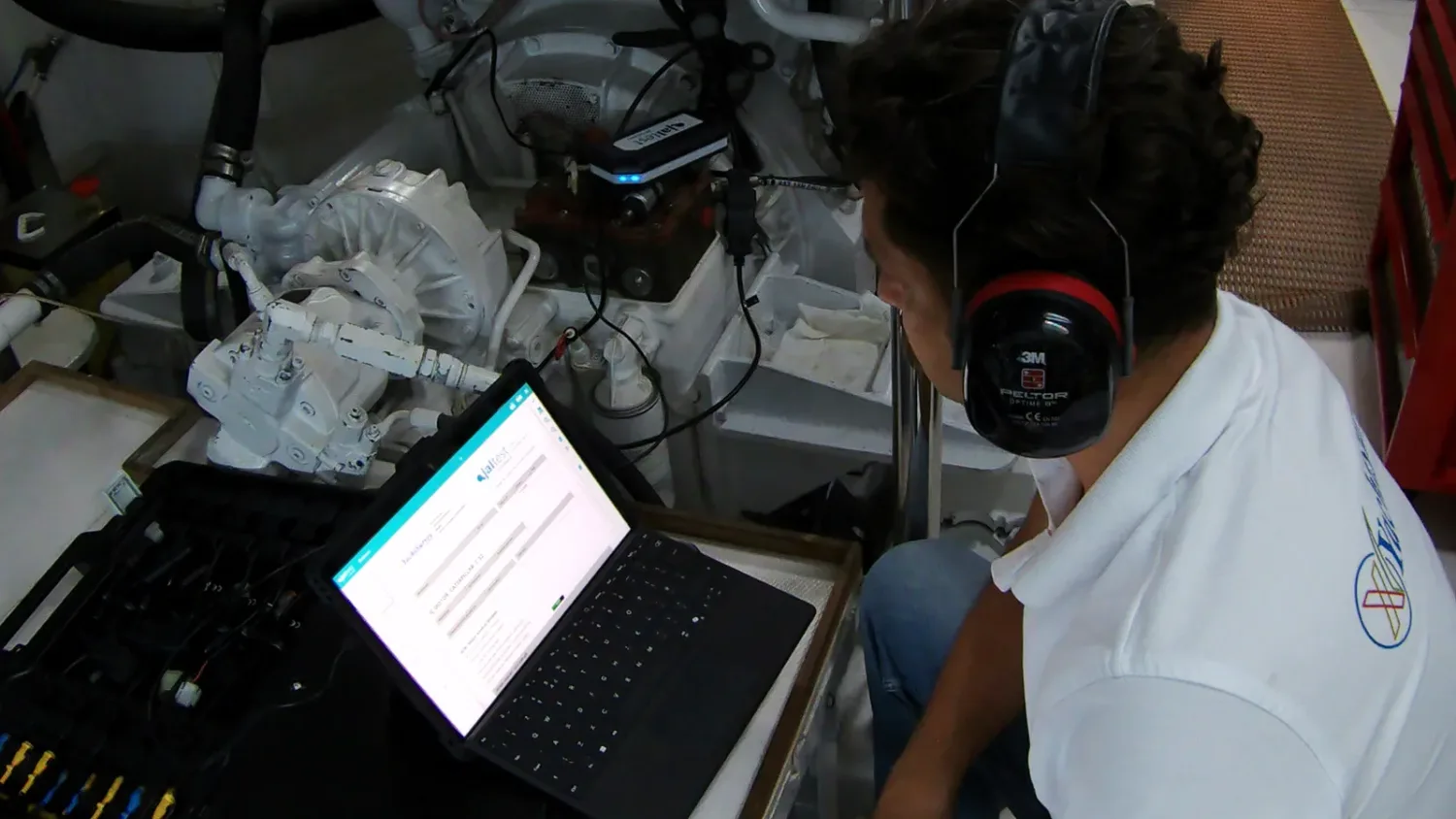
Logging data with the engine running 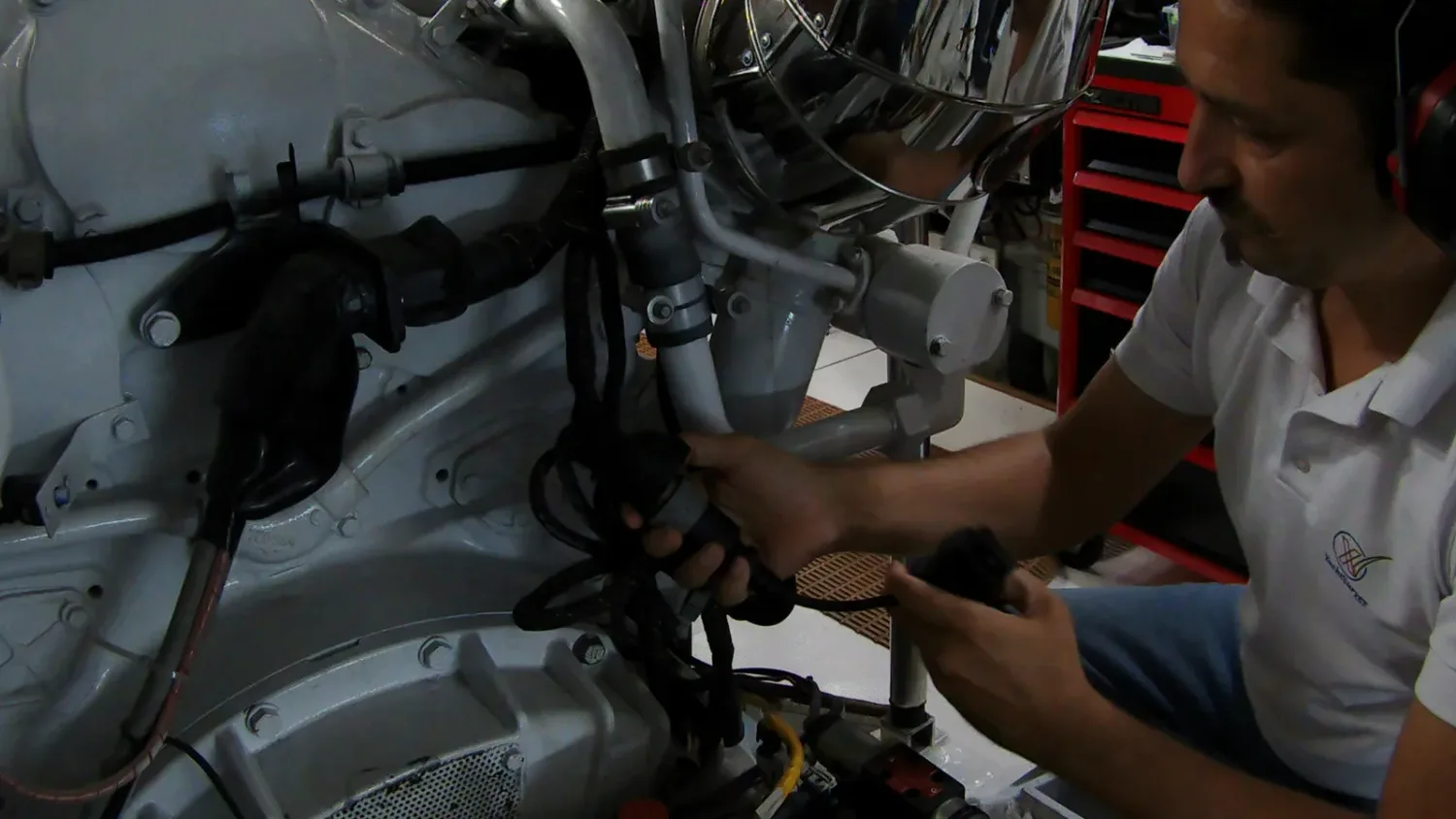
Checking play in the shaft line 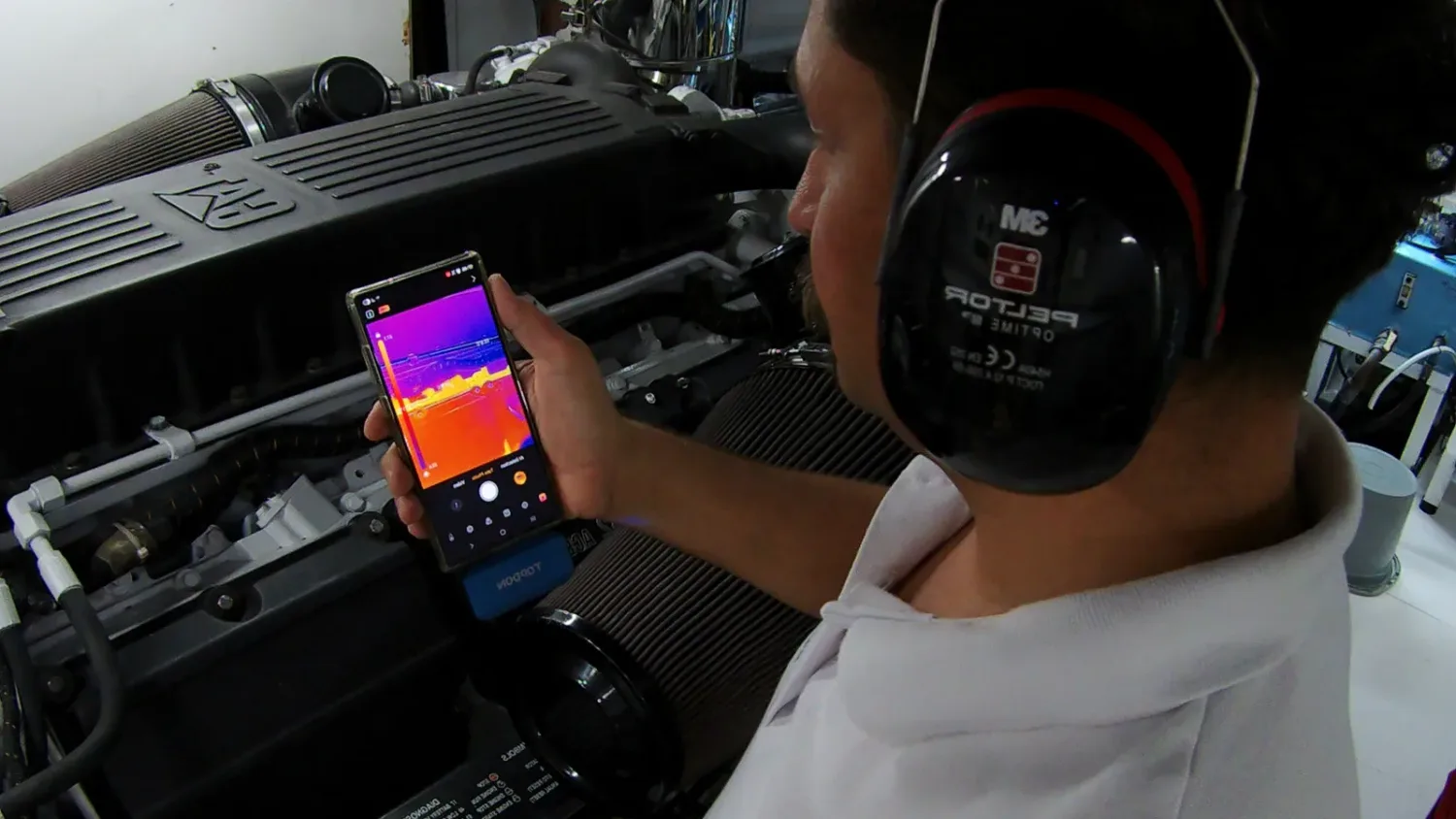
Thermal reading across the block 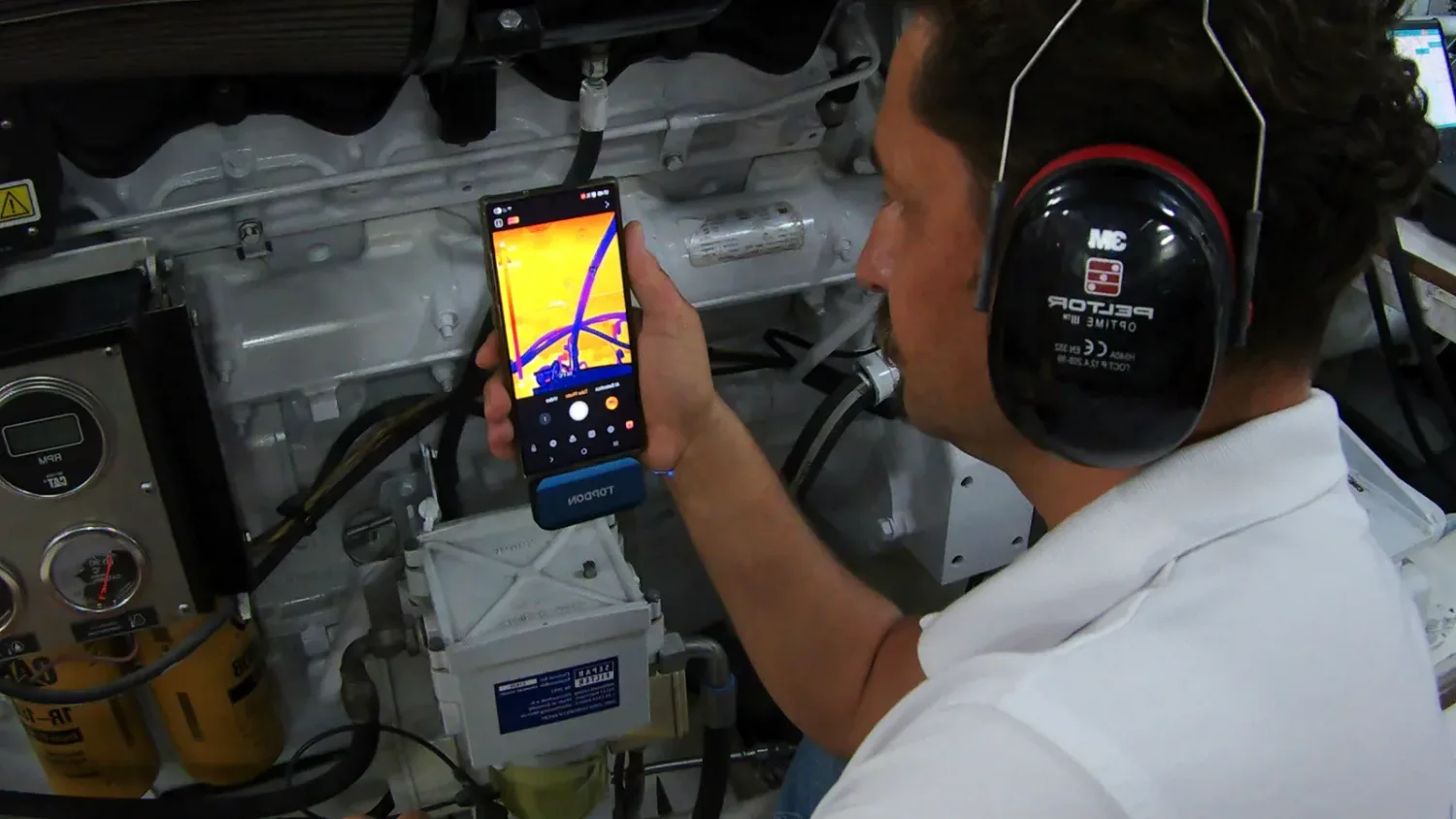
Temperature difference in the cooling circuit 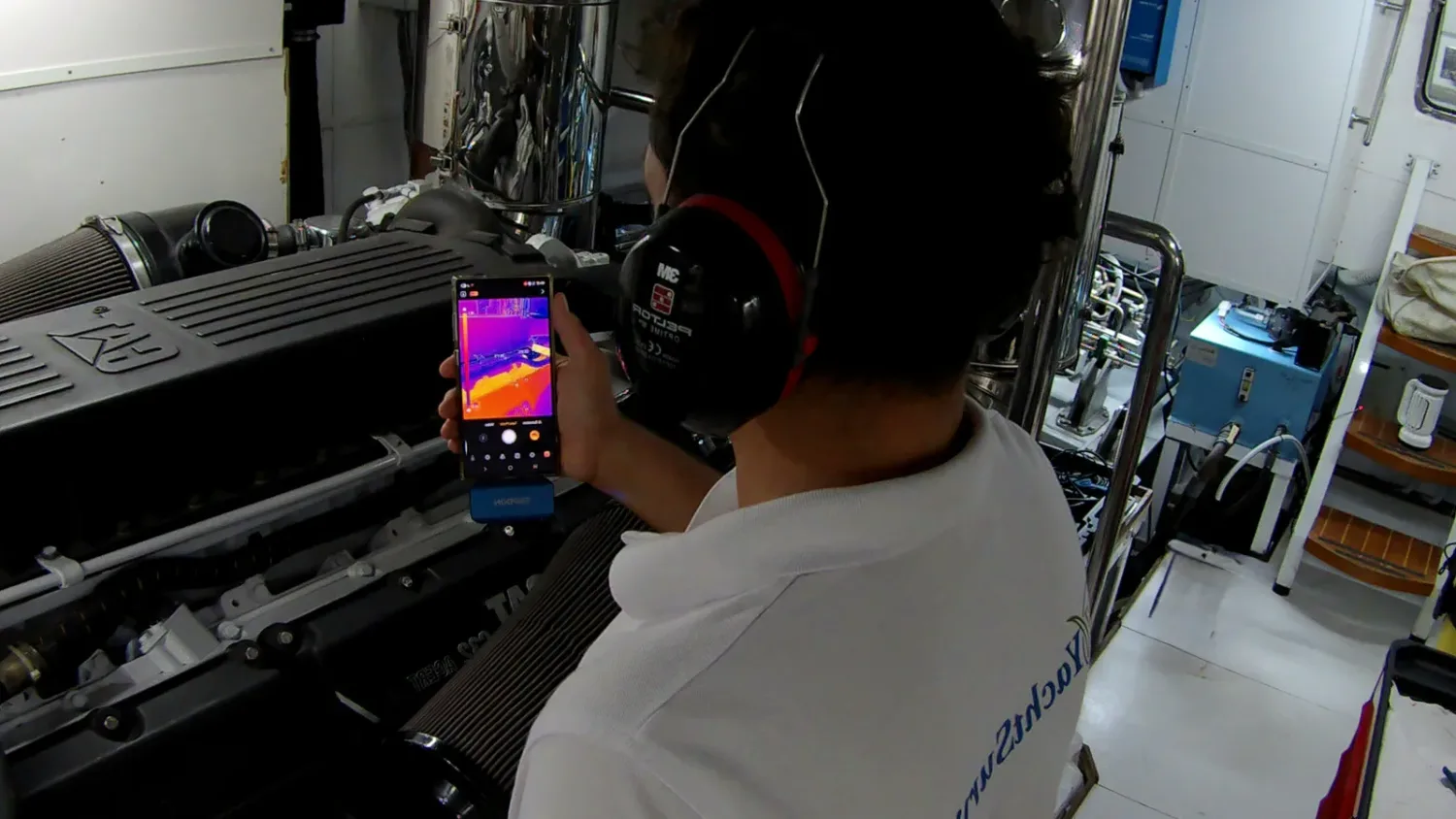
Temperature sweep along the exhaust 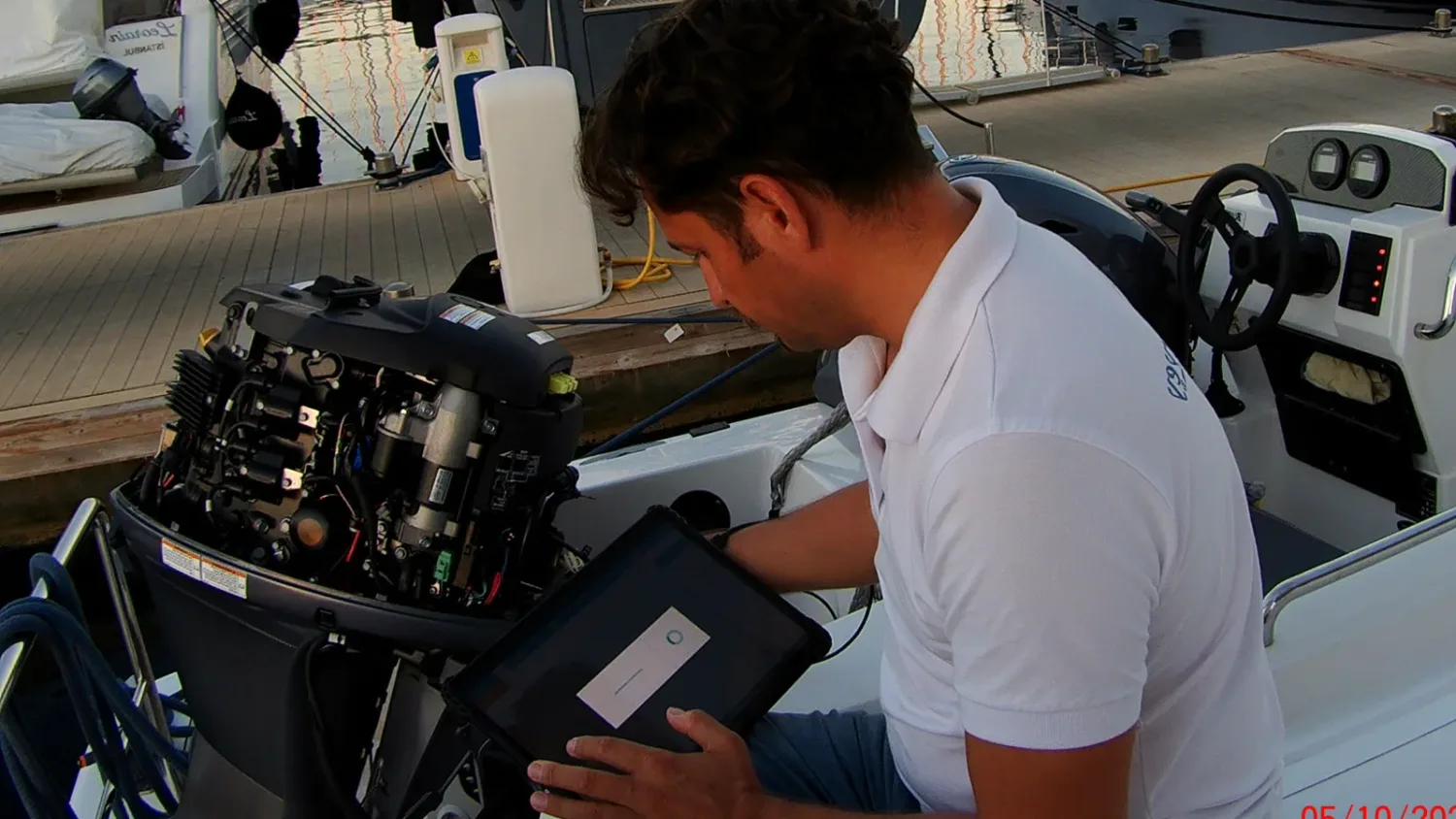
Checklist worked through on a tablet 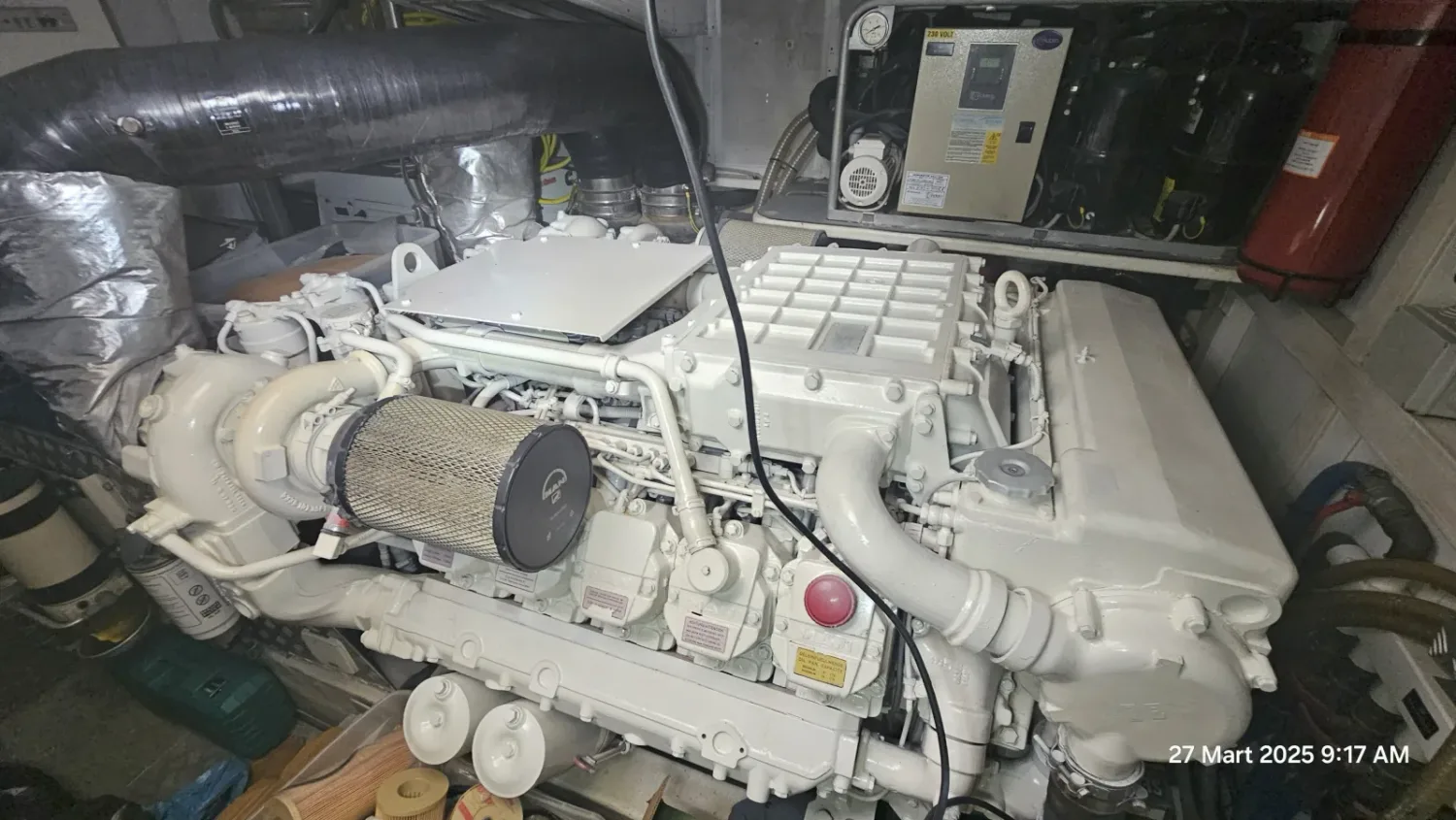
Main engine and auxiliary circuits
Frequently asked questions
Common questions
Do you strip the engine down?
Are low engine hours always better?
How are exhaust problems found?
Services
Other services
- SURVEY
Pre-Purchase Yacht Survey
Find out what the vessel really is before you commit. An independent report backed by measured values you can use in the negotiation.
26 € / ft - SURVEY
Damage Survey
The true extent and repair cost of the damage, documented independently — a report you can put in front of your insurer.
26 € / ft - SURVEY
Yacht Valuation
The vessel's real market value, grounded in technical findings — a reasoned valuation for sale, insurance or legal use.
25 € / ft
Contact
Book your survey
Tell us where the vessel lies and your approximate date — we reply the same day.

Serkan Kotel
Yacht surveyor · IIMS · ABYC · MCA — the person who answers the phone, walks the boat and signs the report is the same person.
Phone
+905320595917Service areas
Bodrum · Yalıkavak · Turgutreis · Milas · Göcek · Fethiye · Marmaris · Datça · İstanbul · Ayvalık