
VIRTUAL TOUR
What does a surveyor actually look at?
Most people who read a survey report never see how it was produced. This page shows it: a walkthrough tour inside the yacht, and the stations we work below the waterline. Both come from real surveys — none of it is brochure photography.
What you read here is not one boat’s findings but themethod — what gets examined at each point, what gets measured, and why a given defect matters.
WALKTHROUGH SURVEY
Through the boat, station by station
The tour is built from panoramas shot during a real survey. Thirty-three spaces carry a hundred and ninety-five stations; each one sets out what we look at there and what gets checked. It starts outside the boat, works down through the salon and helm to the lower deck, and reaches the cabins, the engine room and the technical compartments under the sole.
- spaces
- 33spaces
- inspection stations
- 195inspection stations
- at every point
- 360°at every point
The layout, space by space

- FlybridgeSecond helm, canopy gear and the jet ski aft live here; the tender is inspected on the swim platform.
- GalleyAppliances, gas and electrical installations and raw-water connections are checked.
- SaloonUnder-sole voids, window and hatch sealing and furniture fastenings are checked.
- WheelhouseNavigation electronics, controls and gauges are run one by one.
- Forward cabinsDamp traces, portlight sealing and the chain-locker bulkhead are checked from inside.
- Engine roomMain engines, generators, raw-water circuits and the waterjets are surveyed running.
- Guest cabinsDamp, portlight sealing and the hull sides behind the joinery are examined.
- Tank roomFuel and water tanks, valves and the bottom plating are sighted.
- Master cabinHull windows, damp and the hull sides behind the furniture are examined.
- Bow thrusterThe thruster motor, its battery feed and the tunnel are checked from inside.
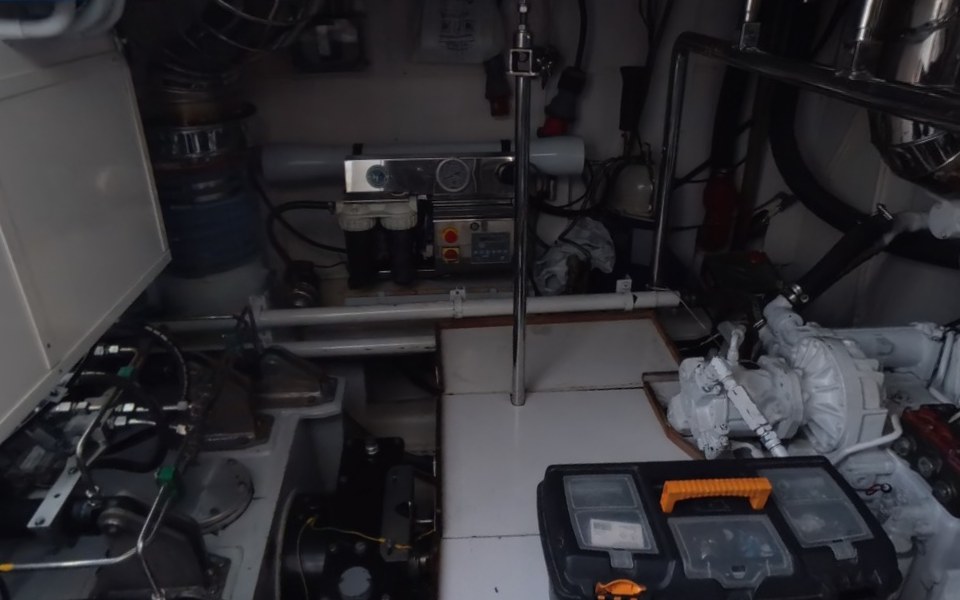
Engine room
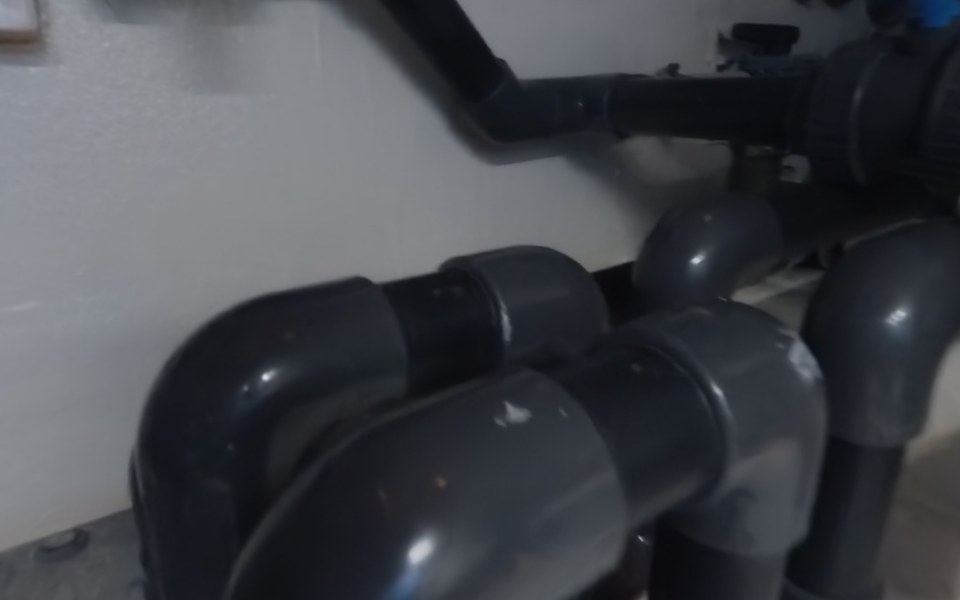
Tank compartment
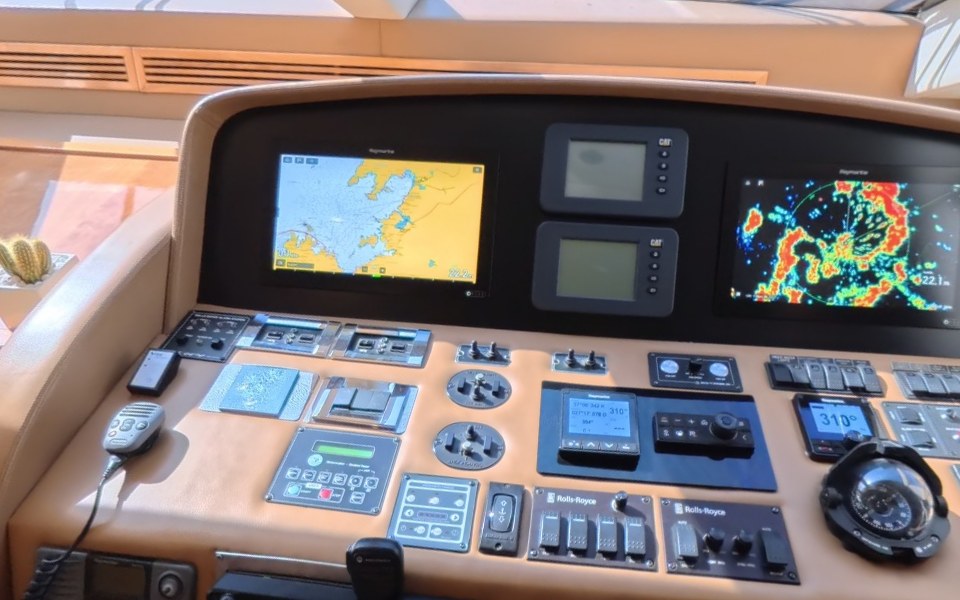
Wheelhouse
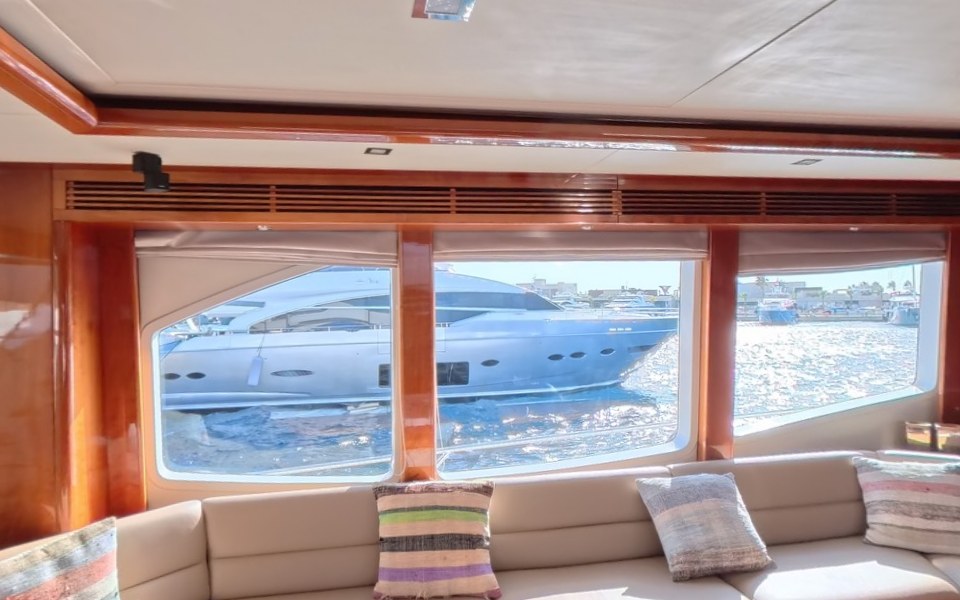
Saloon
The tour is illustrative: the yacht’s identity has been removed, and it sets out method rather than findings.
BELOW THE WATERLINE
The half a buyer never sees
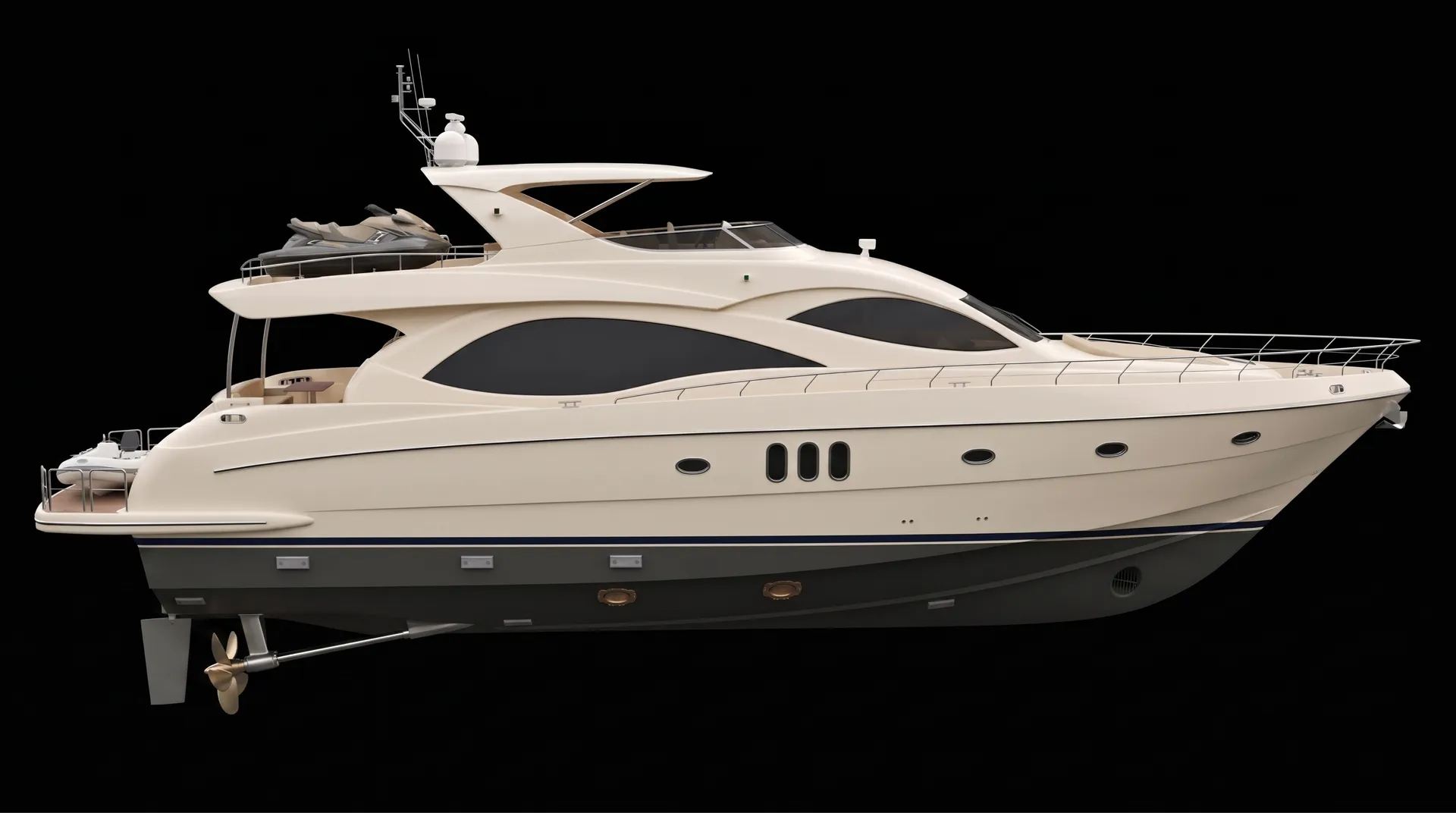
The underwater half of a yacht carries the most weight in a purchase decision and gets looked at the least. The visual below shows what lives under the waterline; inside each station you will find real frames from our own surveys.
Nothing happens until she is out
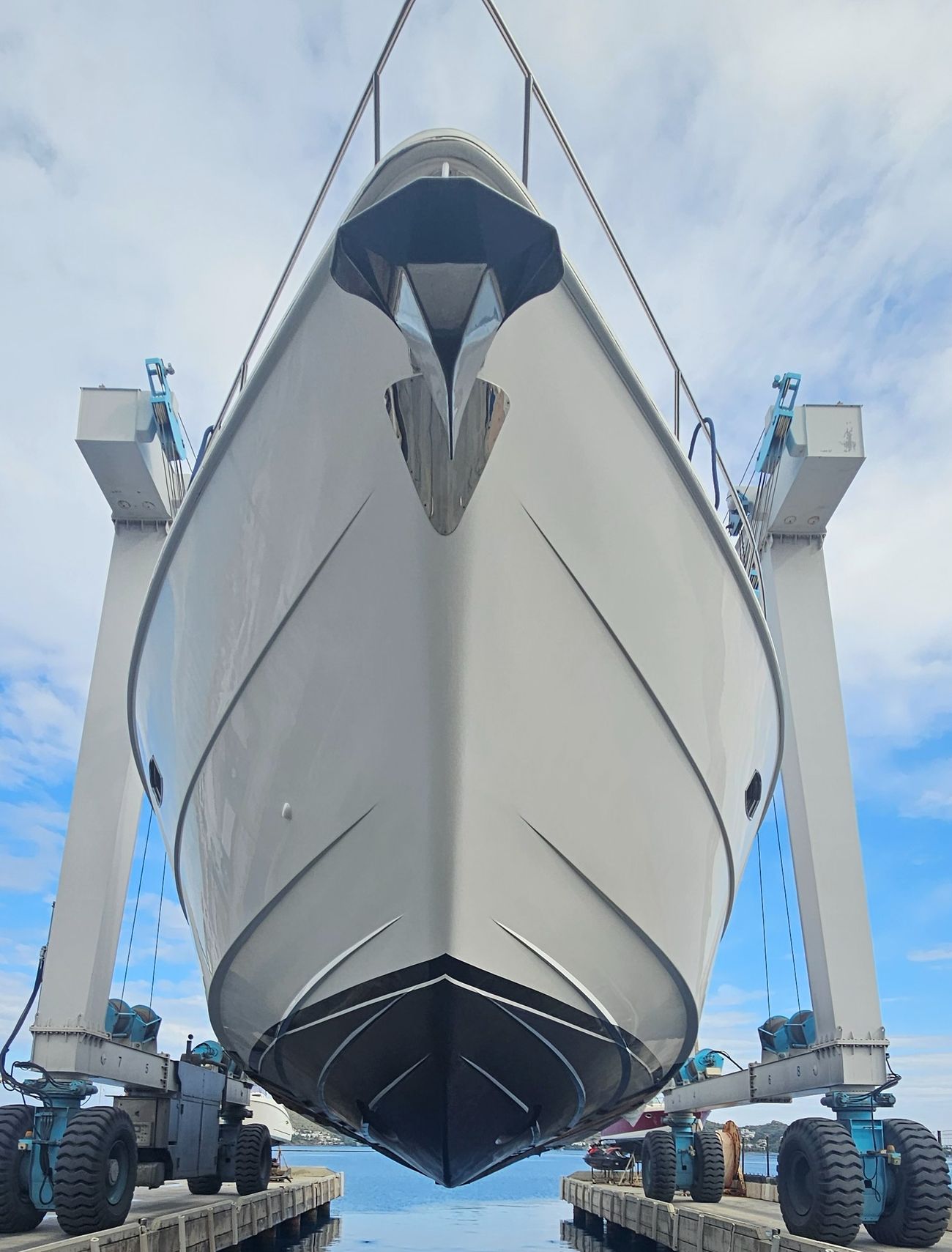
A hull survey can only be done with the boat ashore. Bow-on, the hull form, the spray rails, how true the boot top runs and the thruster tunnel are all read together. The stations below are the order that reading follows.
- 37
- stations, in six zones
- 5 drives
- shaft, waterjet, sterndrive, saildrive, keel
- moisture + UT
- measured, not eyeballed
Bow-on view of a motor yacht hauled out in a travel lift: deep-V sections, spray rails, boot top and bow thruster tunnel — Yalıkavak, April 2025
The underwater layout
Hull and laminate
The structure that carries the boat. A finding here is not a bargaining point, it is a decision point.
Gelcoat cracks and impact damage
What is inspected
The bottom is swept end to end with raking light; the direction and length of each crack is recorded, along with whether it radiates from a centre.
Why it matters
A star-shaped crack means impact, and the laminate beneath it may be delaminated; straight hairline cracks are usually gelcoat fatigue alone. The difference between the two is a difference of tens of thousands of euros.
Common defectStar cracking where cradle pads and lifting slings bear on the hull.
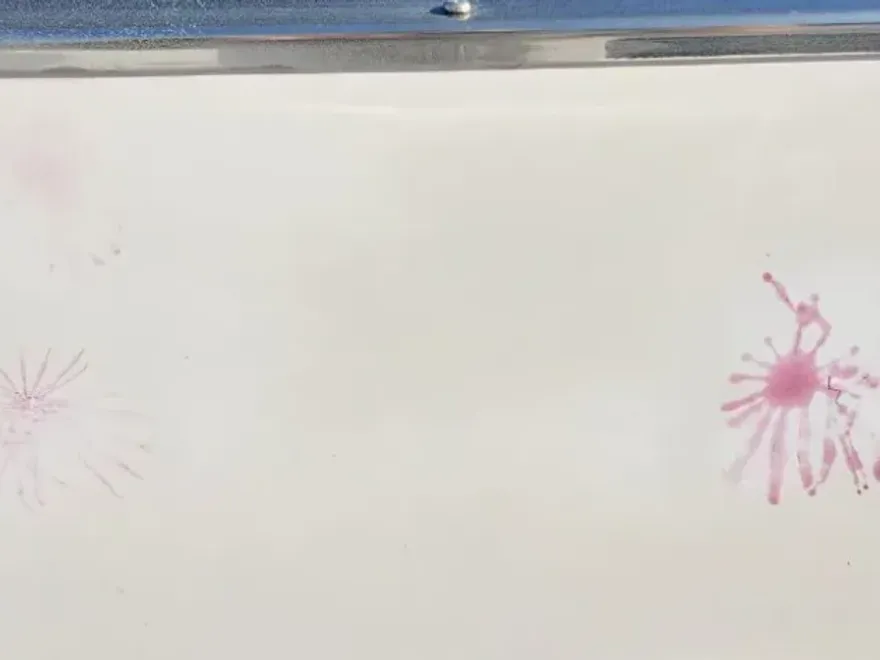
Spider cracks in the gelcoat, circled in red marker Repairs and patches
What is inspected
Differences in colour and surface texture are looked for, along with circular or rectangular outlines showing through the coating; suspect areas are checked again with the moisture meter and by tapping.
Why it matters
A repair is not a defect in itself — a concealed repair is. Where, when and how a repair was made tells you more about the boat’s history than the seller does.
Common defectA repair hidden under antifouling and not accounted for in the boat’s records.
Osmotic blistering
What is inspected
Where the coating has lifted or thinned, the gelcoat is examined for blisters; a suspect blister is opened, the fluid smelled and a moisture reading taken.
Why it matters
Osmosis directly reduces value, and putting it right means stripping and drying the whole bottom — a job measured in months and comparable to a fraction of the boat’s price.
Common defectClusters of blisters near the waterline holding fluid with a vinegary smell.
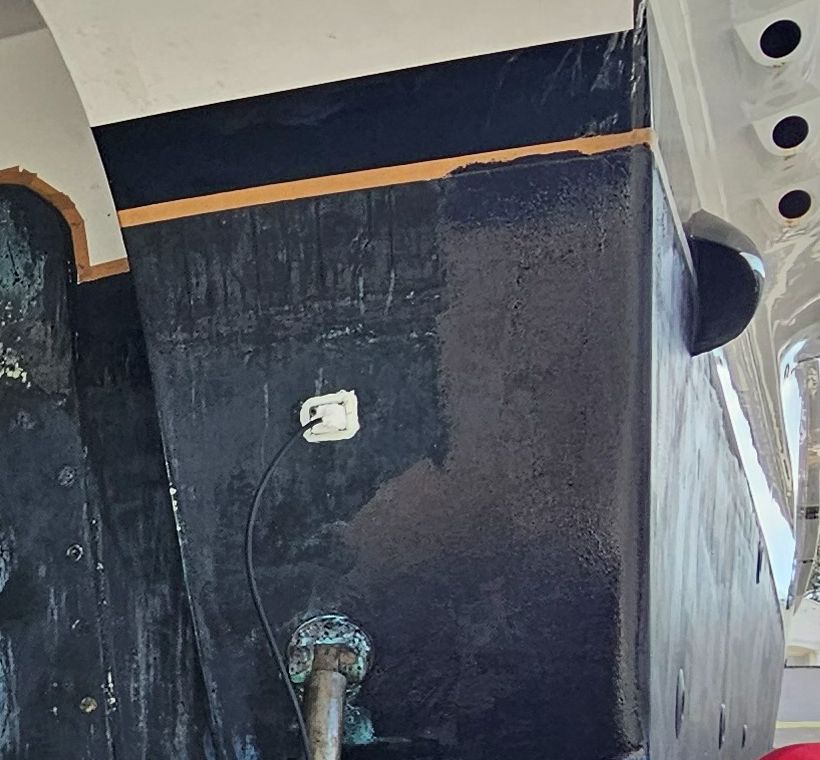
Roller marks and thin coverage in the antifouling; boot top above, a bronze through-hull with verdigris below. Moisture readings
What is inspected
The bottom is read on a grid with a moisture meter, with extra readings at the waterline, along the keel line and around every through-hull. Readings are comparative — there is no absolute pass/fail threshold.
Why it matters
Elevated moisture starts long before osmosis becomes visible. The spread between areas of the same hull tells you more than any single high reading.
A moisture reading cannot be interpreted without recording how long the boat has been afloat.
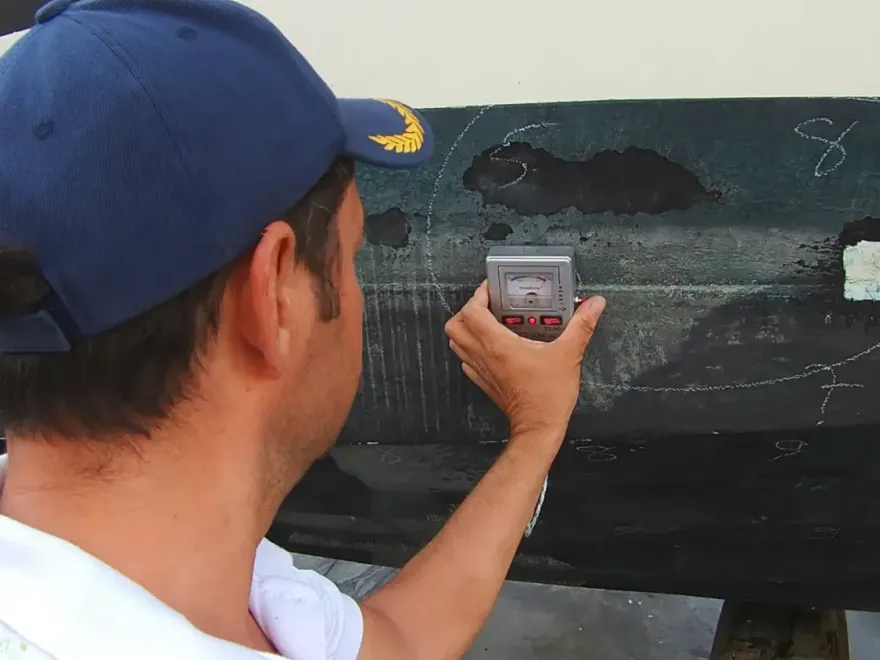
Moisture meter survey over chalk-marked patches on the bottom Ultrasonic thickness measurement
What is inspected
Laminate thickness is confirmed with an ultrasonic gauge where there is doubt; on metal hulls, plate thickness and pitting depth are measured.
Why it matters
On a steel or aluminium hull you cannot see plate loss by eye. On GRP, whether a repair reached the original thickness is only established by measuring.
Through-hulls and seacocks
Every hole in the hull. Most boats that sink, sink through one of these.
Seacocks
What is inspected
Every underwater through-hull is opened and closed by hand; valve body, flange and strainer lid are checked for leaks, and the laminate around each fitting is examined for cracking and past repairs.
Why it matters
A seized valve will not shut when it matters. ABYC requires a seacock to be readily accessible as installed — reachable quickly and safely in an emergency; a valve buried at the back of a locker does not meet that.
Common defectA valve that has not been exercised in years and whose handle will not move.
Reference ABYC H-27 27.5.1 · 27.6.3
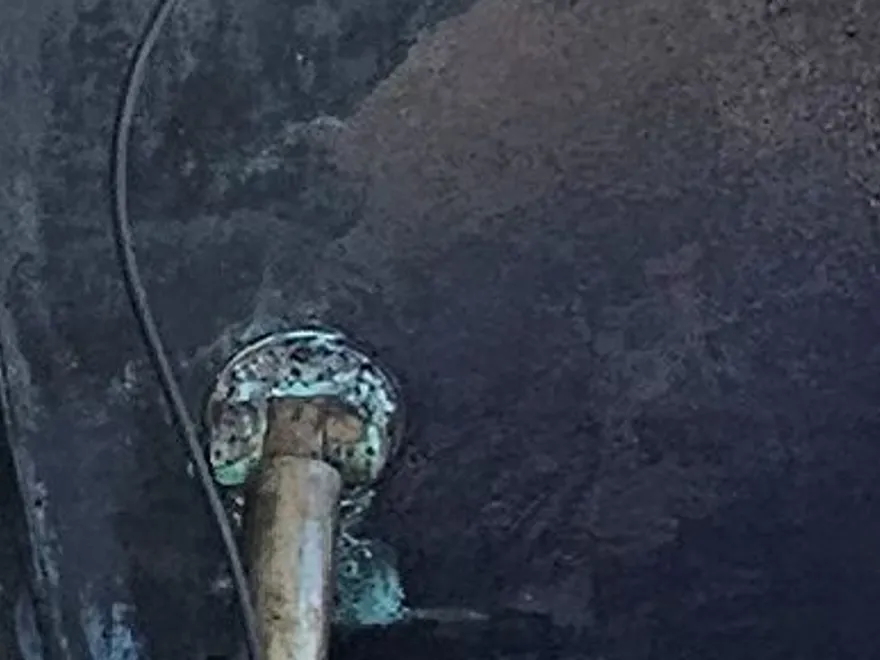
A bronze through-hull below the waterline, covered in verdigris Strength of the seacock assembly
What is inspected
How the valve lands on the hull, its backing plate, thread engagement and any signs of strain at the inboard end are examined; the assembly is worked by hand to feel for movement.
Why it matters
The standard requires the whole assembly — through-hull and tail piece included — to withstand a 227 kg (500 lb) static load applied to its inboard end for 30 seconds without losing its ability to stop the water. A dropped tool or a foot in the bilge produces that load.
227 kg · 30 seconds
Reference ABYC H-27 27.6.1 · 27.9.1
Hose connections and clamps
What is inspected
Every connection is checked for a clamp seated beyond the barb, clamp width, corrosion, and whether the hose has gone hard.
Why it matters
The standard calls for a bead or serrations at least 0.38 mm (0.015 in) deep at the hose end, and for a 12.7 mm (0.5 in) clamp to sit beyond it with at least one clamp width left to the end of the hose. A clamp tightened onto a plain unbarbed spigot works its way off in time.
bead ≥ 0.38 mm · clamp 12.7 mm
Reference ABYC H-27 27.9.2
Generator and air-conditioning intakes
What is inspected
The generator and air-conditioning circuits each have their own intakes, strainers and grilles, assessed separately; grille opening, marine growth and cleaning access are all recorded.
Why it matters
On most yachts the generator runs more hours than the main engines, and its circuit wears accordingly. A fouled air-conditioning intake stops the system in midsummer.
Bilge drain plug
What is inspected
The plug is removed, its thread and seal examined and the watertightness of its housing assessed. On a hauled-out boat, the colour and quantity of water draining from the bilge is recorded.
Why it matters
The standard requires the plug to be at the lowest point of the bilge when the boat is stored ashore, and to be readily accessible. The colour of what drains also tells you something: oily water comes from the engine room, salt water from a through-hull.
Reference ABYC H-27 27.5.4 · 27.7.1
Transducers and retrofitted holes
What is inspected
Depth and speed transducers are checked for mounting, sealing and cable entry; the workmanship of every hole opened by retrofitted equipment is assessed separately.
Why it matters
The holes the yard drilled were engineered; the ones drilled later usually were not. A hole opened without backing both leaks and weakens the laminate.
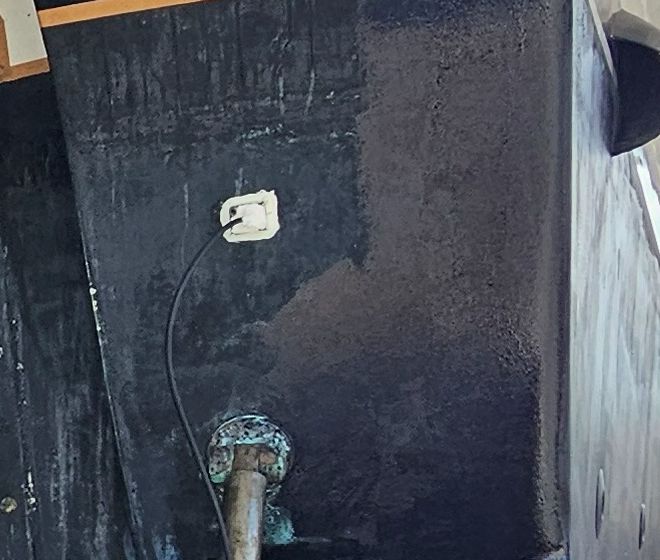
Transom-mounted transducer and cable entry; the bronze fitting below shows verdigris.
Antifouling and waterline
The most visible underwater surface, and the one most often used to hide what is beneath it.
Condition of the antifouling
What is inspected
Remaining thickness, adhesion and lifting are assessed; how many coats have been laid on, and whether they are compatible, is read from the edges.
Why it matters
Incompatible coats built up on each other eventually let go all at once and force a full strip. A thick, freshly applied coat, on the other hand, covers everything beneath it — one of the situations a surveyor watches most closely.
Common defectA single fresh coat applied just before the boat went on the market.
Boot top and trim
What is inspected
Whether the band runs true and level on both sides, and whether the painted waterline matches where the boat actually floats, is examined.
Why it matters
A boot top that sits permanently under water shows the boat is floating deeper than designed — added equipment, water taken aboard, or weight in the wrong place. Repainting the band higher is a common way of concealing it.
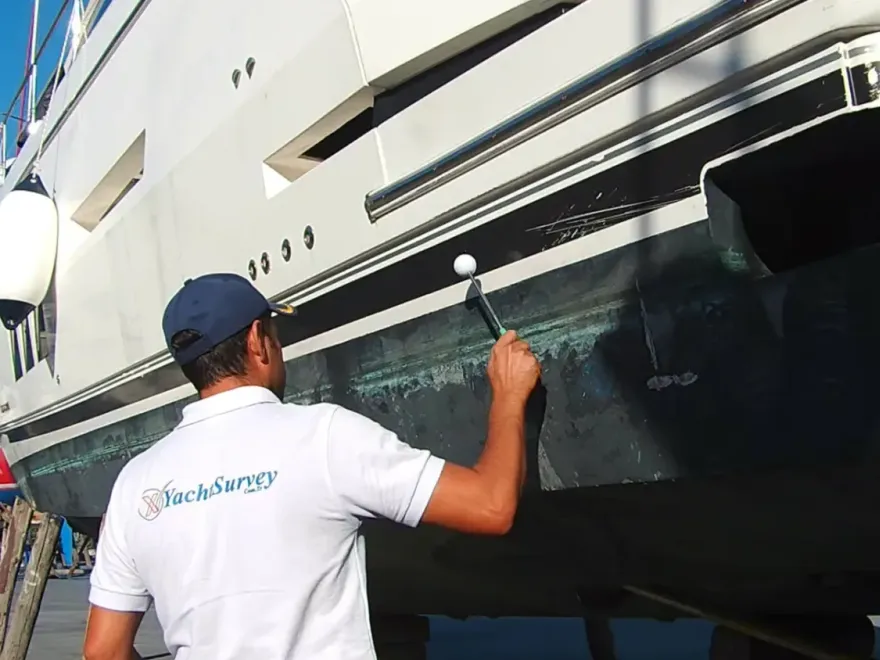
Sounding the hull along the boot top — YachtSurvey surveyor at work Cradle pad marks
What is inspected
The points where the cradle pads bear are examined separately. The patch under each pad is unpainted and usually never seen; during survey the boat is shifted, or a mirror is used, so that area is inspected too.
Why it matters
The patch under a cradle pad is the least-inspected part of any hull, and both cracks and repairs stay hidden there most easily. Even the cathodic protection standard requires anodes to be mounted clear of marked sling and blocking areas — those areas genuinely behave differently.
Reference ABYC E-2 2.5.5.4
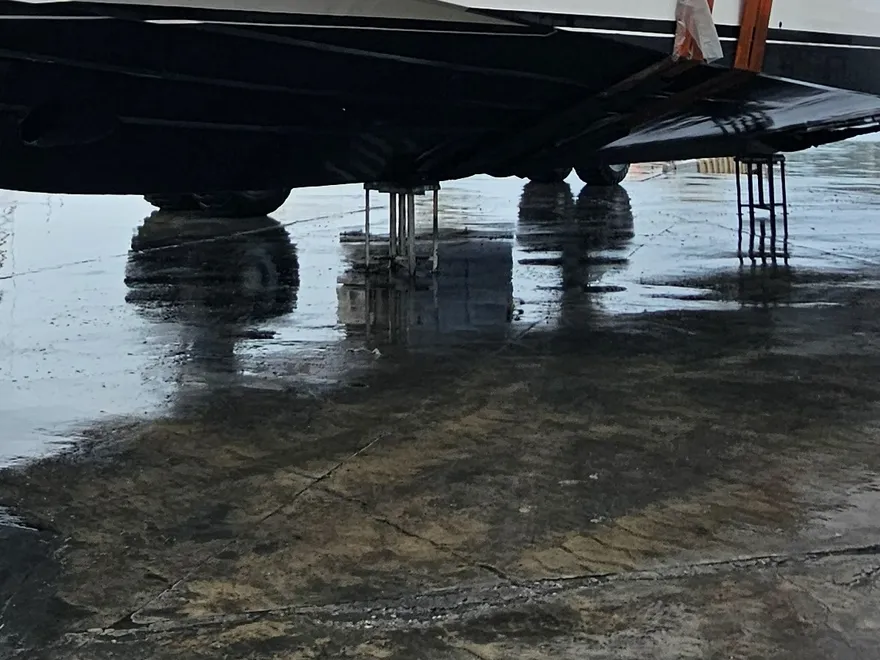
Keel blocks under the hull — the patch beneath each pad stays unpainted Marine growth
What is inspected
The extent and distribution of growth is recorded; grilles, tunnel interiors and the area around the propeller are swept with a torch.
Why it matters
Growth is not only a speed and fuel issue: where it concentrates tells you how long the boat has sat idle and where the coating has given up.
Cathodic protection
The circuit that protects the boat’s underwater metals. It works silently, and it fails silently.
Remaining anode mass
What is inspected
Remaining mass and exposed surface area of the anodes on hull, shaft, propeller, rudder and drive unit are assessed.
Why it matters
The standard requires anode mass to cover at least two inspection intervals — typically a year. How much current an anode can deliver depends on its exposed area; how long it can sustain that current depends on its mass. The two are assessed separately.
Reference ABYC E-2 2.7.1
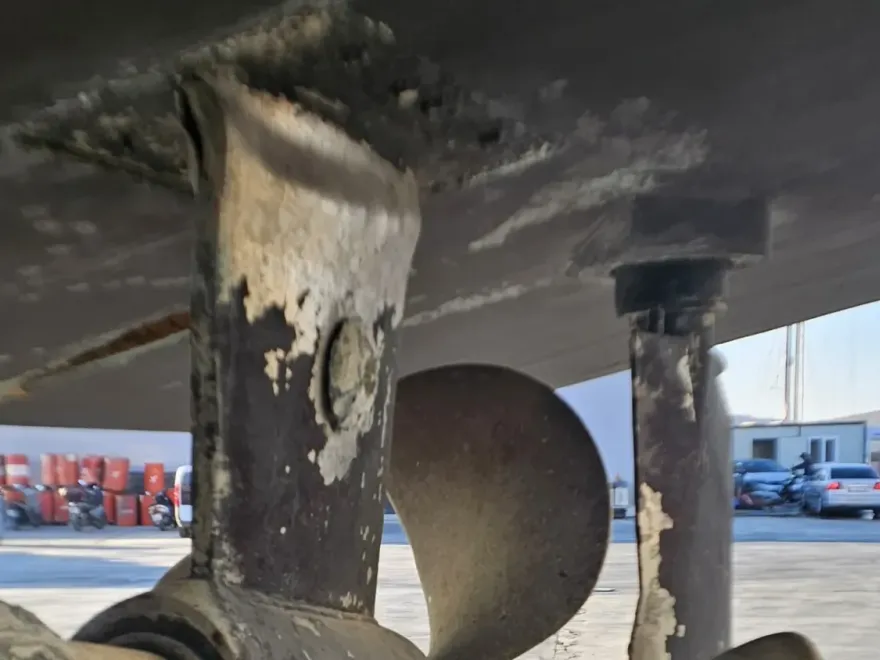
A wasted anode under the trim plate, with propeller and corroded surfaces How the anodes have wasted
What is inspected
It is not how much the anodes have wasted but how: evenly, on one side only, crusted over, or not at all.
Why it matters
An anode that has wasted fast and unevenly is the first sign of stray current aboard or at the berth. One that has not wasted at all shows the protection was never connected. Both are findings; the second is the more dangerous, because the boat is assumed to be protected.
Common defectAn anode that looks brand new with no wastage at all.
Bonding circuit
What is inspected
Continuity from each protected metal to the bonding system is measured while the boat is ASHORE; each anode is checked for a single connection point to the system.
Why it matters
The standard requires no more than 1 ohm between each protected metal and the anode; above that, system performance drops. Note also that propeller shafts do not provide reliable continuity to the bonding system — assuming protection through the shaft is a mistake.
≤ 1 ohm · measured ashore only
Reference ABYC E-2 2.5.6
Dissimilar metal contact
What is inspected
Contact between underwater bronze, stainless and aluminium parts, and between them and the hull, is traced; verdigris, pinking and porosity are looked for.
Why it matters
A brass through-hull that has gone pink and can be scratched with a fingernail has lost its zinc (dezincification) and has no strength left. On an aluminium hull, bronze seacocks, propellers and rudders must additionally be electrically isolated.
Common defectA pink, fingernail-scratchable brass through-hull.
Reference ABYC E-2 2.10.3
Drive, steering and keel
The boat’s thrust and steering gear. The stations below carry a badge for the drive type — follow the badge that matches your boat.
Shaft alignment and shaft anodeSHAFT DRIVE
What is inspected
The shaft is turned by hand and watched for runout and bending; the area between the collar anode and the propeller is examined separately.
Why it matters
A bent shaft eats the bearing, the seal and the coupling together. The standard requires shaft anodes not to restrict water flow to the strut bearings; an anode in the wrong place starves that bearing.
Reference ABYC E-2 2.7.2
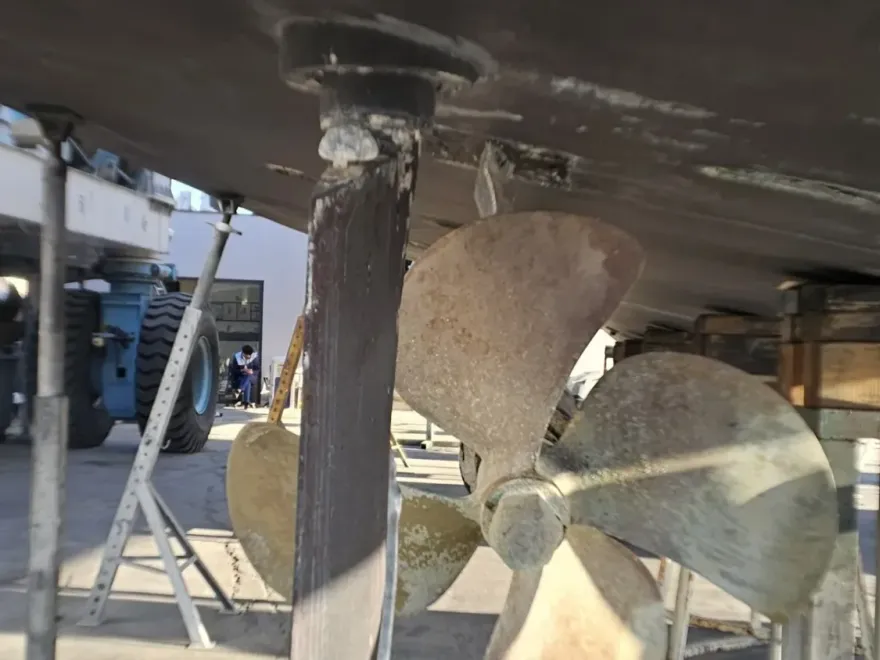
Shaft, P-bracket and propeller — the drive line on a hauled-out boat Cutless bearing clearanceSHAFT DRIVE
What is inspected
The shaft is worked up and down inside the bearing and the play measured; the liner wear and the condition of the rubber staves are checked.
Why it matters
The source standard tables bearing-to-shaft clearance by shaft diameter: 0.127–0.254 mm on a 50.8 mm (2 in) shaft, 0.178–0.356 mm on a 76.20 mm (3 in) shaft. Above that range means vibration; below it means heat.
ø50.8 mm shaft → 0.127–0.254 mm
Reference ABYC P-6 6.8.1
Shaft sealSHAFT DRIVE
What is inspected
Seal type, drip rate, the age of its bellows and its accessibility are assessed; where a stuffing box is fitted, the clearance for repacking is checked.
Why it matters
The standard requires the shaft seal to be reachable quickly and safely WITHOUT TOOLS — because this is the first place you look when water comes in. If repacking means dropping the shaft coupling, the installation is wrong.
Reference ABYC P-6 6.7.1 · 6.7.2
PropellerSHAFT DRIVE
What is inspected
Blade tips are examined for bruising, nicks, cavitation erosion and departure from pitch; the hub nut, key and locking arrangement are checked.
Why it matters
An unbalanced propeller feeds vibration straight into the shaft, bearing and seal. Even a small bruise at a blade tip both costs efficiency and starts cavitation.
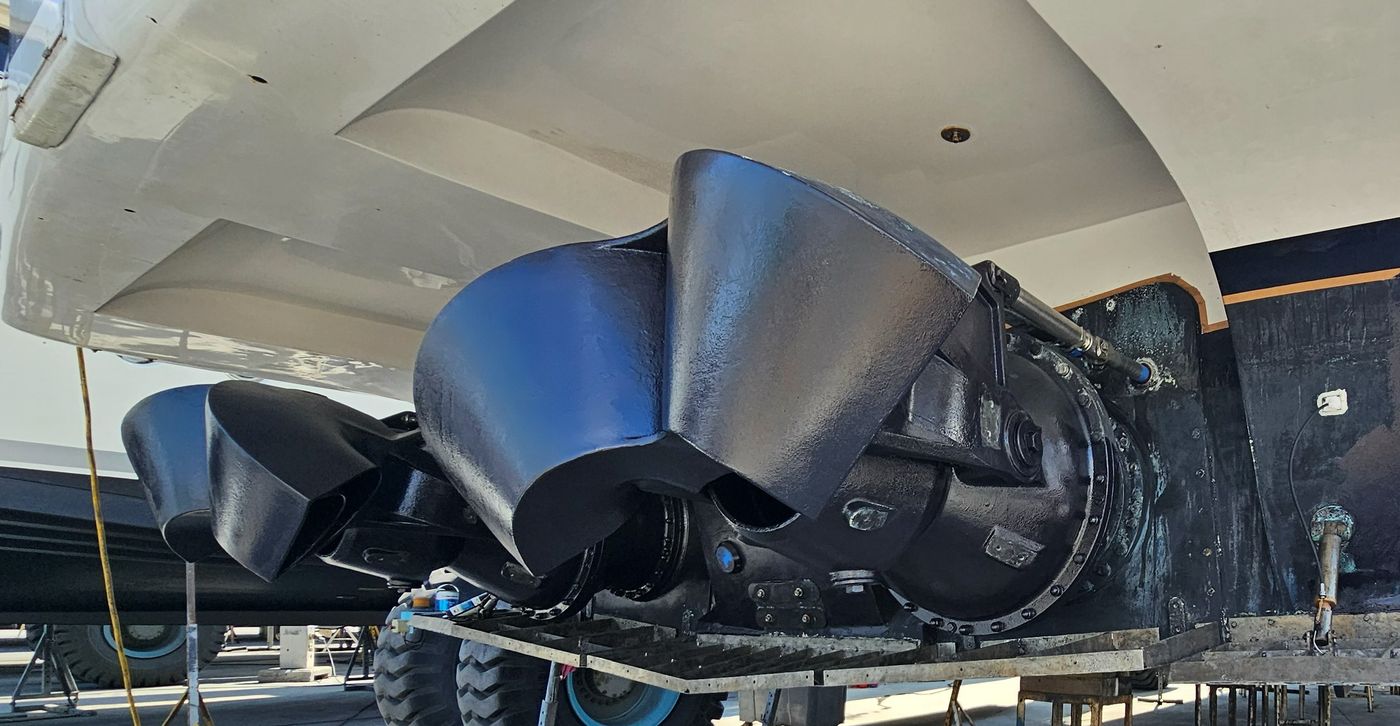
Surface drive unit and propeller on a hauled-out yacht. Rudder blade, stock and bearingsSHAFT DRIVESAILING YACHT
What is inspected
The blade is turned lock to lock and play in the upper and lower stock bearings is measured by hand; the blade is sounded for voids and its lower edge checked for water draining out.
Why it matters
Water inside a rudder blade freezes in winter and splits it; as the stock bearing opens up, the blade moves and the stock eventually fatigues. Neither can be assessed afloat.
Common defectWater draining from the bottom edge of the rudder blade after haul-out.
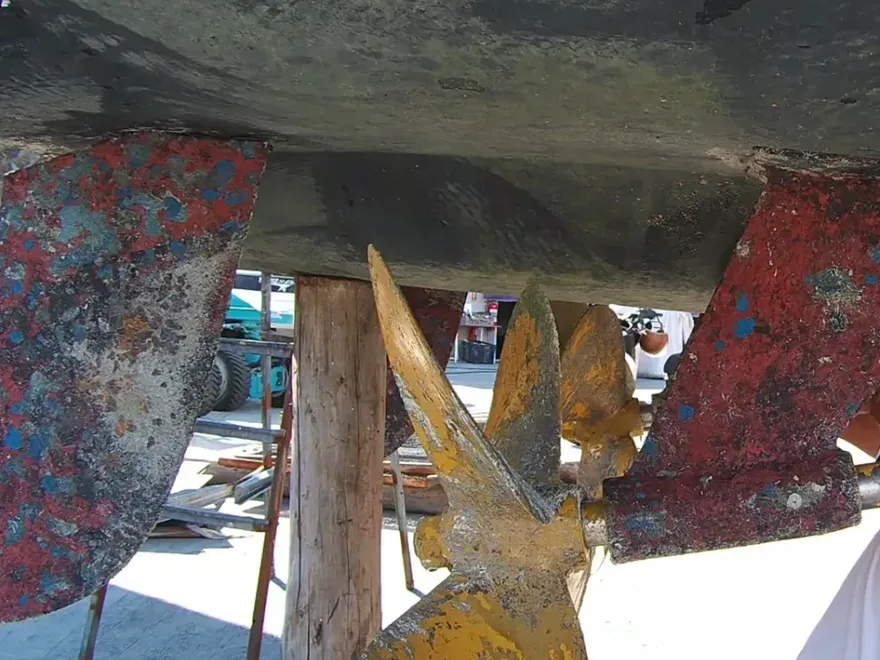
Rudder blade and propeller, seen close up under the hull Waterjet intake grateWATERJET
What is inspected
Grate bars are checked for bending, breakage and marine growth; the gelcoat around the opening, the grate fasteners and the sealing are inspected as well.
Why it matters
On a waterjet boat the drive starts at this opening in the hull bottom. A single bent bar disturbs the flow and brings on cavitation and lost thrust; anything that gets past the grate goes straight into the impeller.
Jet tunnel and hull penetrationWATERJET
What is inspected
The joint between the intake tunnel and the hull is examined for cracking and laminate separation; the flange and bolts where the unit lands on the hull are checked for sealing and corrosion. The same area is inspected from inside the boat.
Why it matters
Jet and sterndrive systems are exempt from the seacock requirement because they are integrated from intake to discharge — meaning there is no seacock here. This joint is the only thing keeping the water out.
Reference ABYC H-27 27.5.1 (istisna 4)
Impeller and wear ring clearanceWATERJET
What is inspected
Impeller and bearings are inspected through the unit’s hatch; blade tips are checked for bruising, nicks and cavitation erosion, and the impeller-to-wear-ring clearance is measured. The unit’s shaft seal and oil level are checked too.
Why it matters
As that clearance opens up, thrust falls and fuel burn rises. Because replacement means pulling the unit, today’s clearance reading is a direct line item in next year’s budget.
Nozzle and reverse bucketWATERJET
What is inspected
Nozzle and bucket are run lock to lock, joint play is measured and the hydraulic rams are watched for leaks.
Why it matters
A waterjet has no rudder: steering comes from the nozzle swinging, astern thrust from the bucket dropping to turn the flow forward. Wear in the bucket hinge shows up as lost stopping power astern — the boat takes longer to pull up.
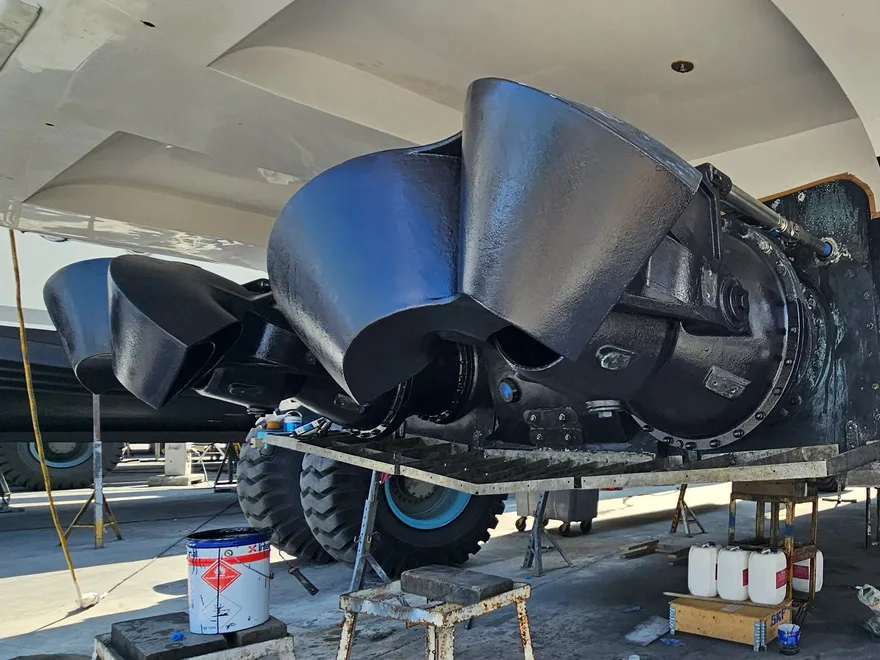
Twin waterjet units — nozzles and reverse buckets on a hauled-out boat Interceptors and trim platesWATERJET
What is inspected
The plates below the transom, their tracks and hydraulic rams are checked; both plates are run through full travel.
Why it matters
On a waterjet boat, trim is corrected with these plates. One that sticks or runs unevenly leaves the boat permanently heeled under way.
Transom shield and bellowsSTERNDRIVE
What is inspected
The sealing and corrosion of the transom shield are examined; the shaft, exhaust and shift bellows are each checked for cracking, hardening and age.
Why it matters
The bellows is the most critical wear item on a sterndrive boat: when one splits, the boat takes water directly and there is no valve to close. The replacement interval is the manufacturer’s; at survey, the record of the last change is what matters.
Common defectBellows with no documented replacement date.
Lower unit, oil and anodeSTERNDRIVESAILDRIVE
What is inspected
The lower unit oil is drained and checked for colour, water and metal particles; the propeller shaft is turned by hand to feel for play, and the unit anode and coating are inspected.
Why it matters
Milky oil means the seals are passing water. Caught early it is a seal job; caught late it is a gear set.
Common defectMilky oil in the lower unit.
Saildrive diaphragmSAILDRIVE
What is inspected
The rubber diaphragm between hull and unit is examined for cracking, hardening and swelling; the moulded-in date is read and compared with the replacement record.
Why it matters
This diaphragm closes the largest single opening in the hull and there is no valve behind it. Manufacturers limit its life in years; an out-of-date diaphragm also puts the boat’s insurance in question.
Common defectA diaphragm with no legible date and no replacement record.
Keel-to-hull jointSAILING YACHT
What is inspected
The joint line is followed end to end and every point where the filler has cracked, opened or is weeping rust is marked. The same line is inspected from inside, in the keel sump.
Why it matters
The horizontal crack here is known as a keel smile, and it is the signature of the boat having grounded or struck something. Telling a cosmetic filler crack from a structural separation is the real work at this station.
Common defectA filler crack weeping rust that reopens every winter.
Keel bolts and nutsSAILING YACHT
What is inspected
The nuts and washers in the keel sump are examined for corrosion, their number and accessibility recorded, and each is checked for standing water beneath it.
Why it matters
The visible face of a nut can look sound while the wastage is inside the laminate, on the part you cannot see. A keel bolt that has sat in salt water for years loses section without showing anything on the outside.
Common defectStanding salt water in the keel sump that has never been drained.
Bow thruster and additions
Everything added to the boat after it left the yard. The holes the yard engineered and the ones drilled later are not the same thing.
Bow thruster tunnel
What is inspected
The tunnel mouth, its grille and the surrounding gelcoat are examined; the inside is swept with a torch for marine growth and coating loss. The line where the tunnel meets the hull is inspected separately for cracking.
Why it matters
The inside of the tunnel cannot be seen afloat, and fouling there cuts thrust directly. Where a thruster has been retrofitted, the tunnel-to-hull joint may not be to the same standard as yard work.
Thruster propeller, shaft and anode
What is inspected
Propeller blades, hub nut and anode are checked; the shaft is turned by hand to feel for play, and the blades are searched for wrapped line and fishing gear.
Why it matters
A single wrap of fishing line on a thruster propeller wears the seal and eventually lets water into the gearbox. The anode here is usually the one nobody has changed in years.
Holes from retrofitted equipment
What is inspected
Every fishfinder, speed probe, extra discharge, camera and added anode connection is inspected individually for backing, sealing and the sealant used.
Why it matters
These holes were not in the boat’s original scantlings. One opened without backing, sealed with the wrong compound, or abandoned and painted over, is among the most common hidden defects on any bottom.
Common defectAn abandoned transducer hole filled with sealant and painted over.
If she is coming out, the survey happens that day
A hull survey is done while the boat is in the travel lift; the patches under the pads cannot be seen until the slings are eased and the boat is shifted. We set the appointment around the yard’s lift slot.
Contact
Book your survey
Tell us where the vessel lies and your approximate date — we reply the same day.
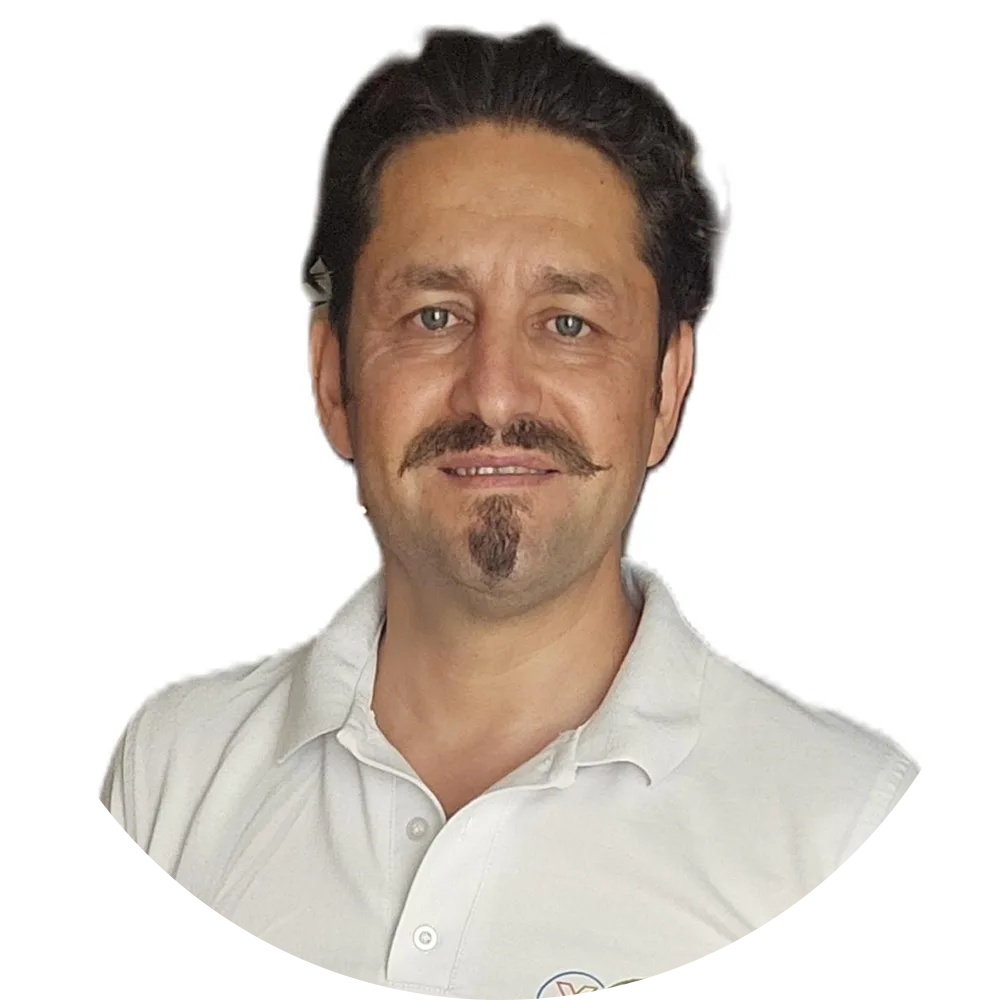
Serkan Kotel
Yacht surveyor · IIMS · ABYC · MCA — the person who answers the phone, walks the boat and signs the report is the same person.
Phone
+905320595917Service areas
Bodrum · Yalıkavak · Turgutreis · Milas · Göcek · Fethiye · Marmaris · Datça · İstanbul · Ayvalık