
Hull Survey
The most expensive repairs come from below the waterline. Moisture, osmosis and the keel joint reported with measured values.
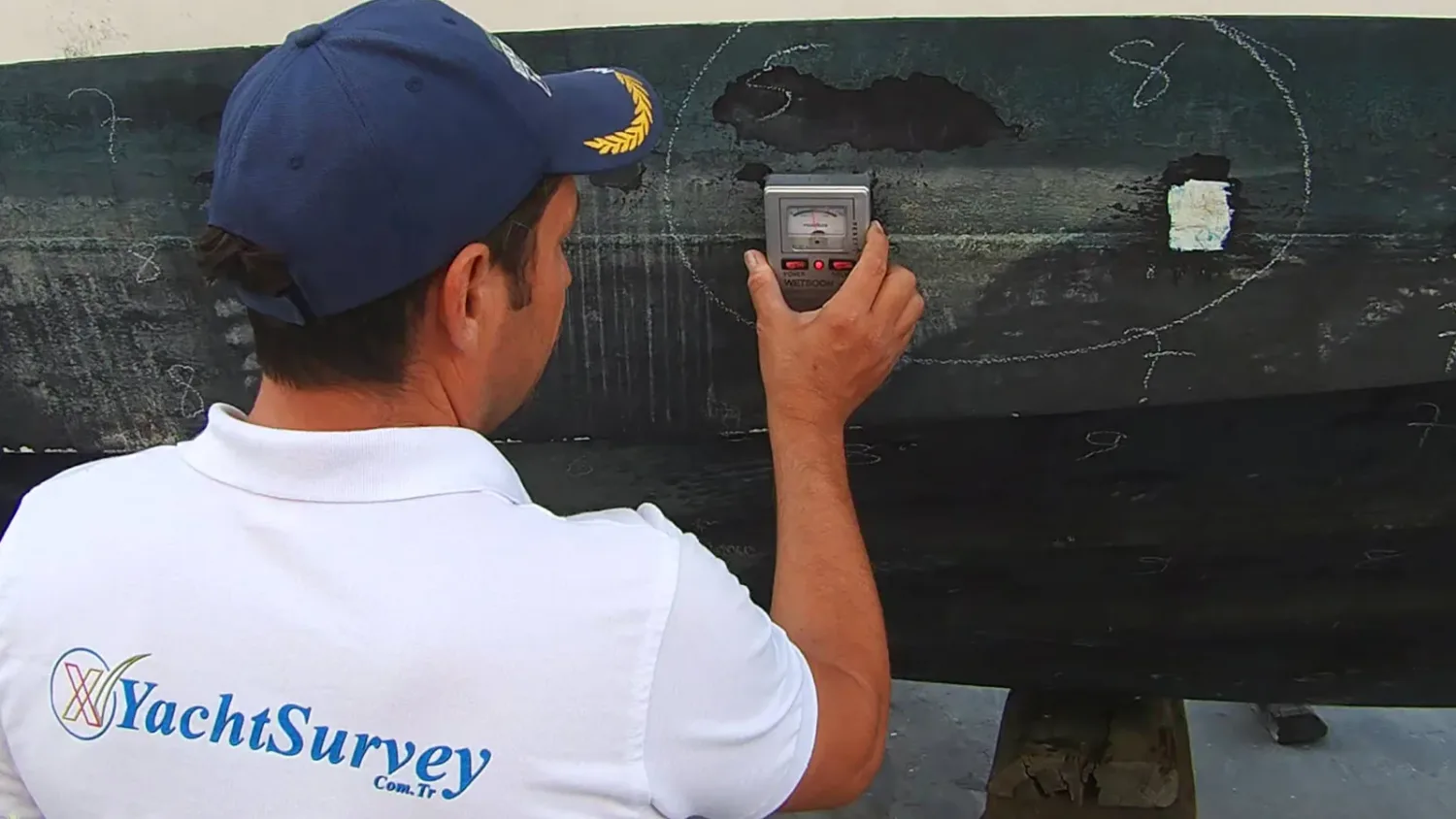
- The hull is scanned on a grid and a moisture map is produced
- Skipper 5 for fast scanning, Wetsoon Pro to confirm
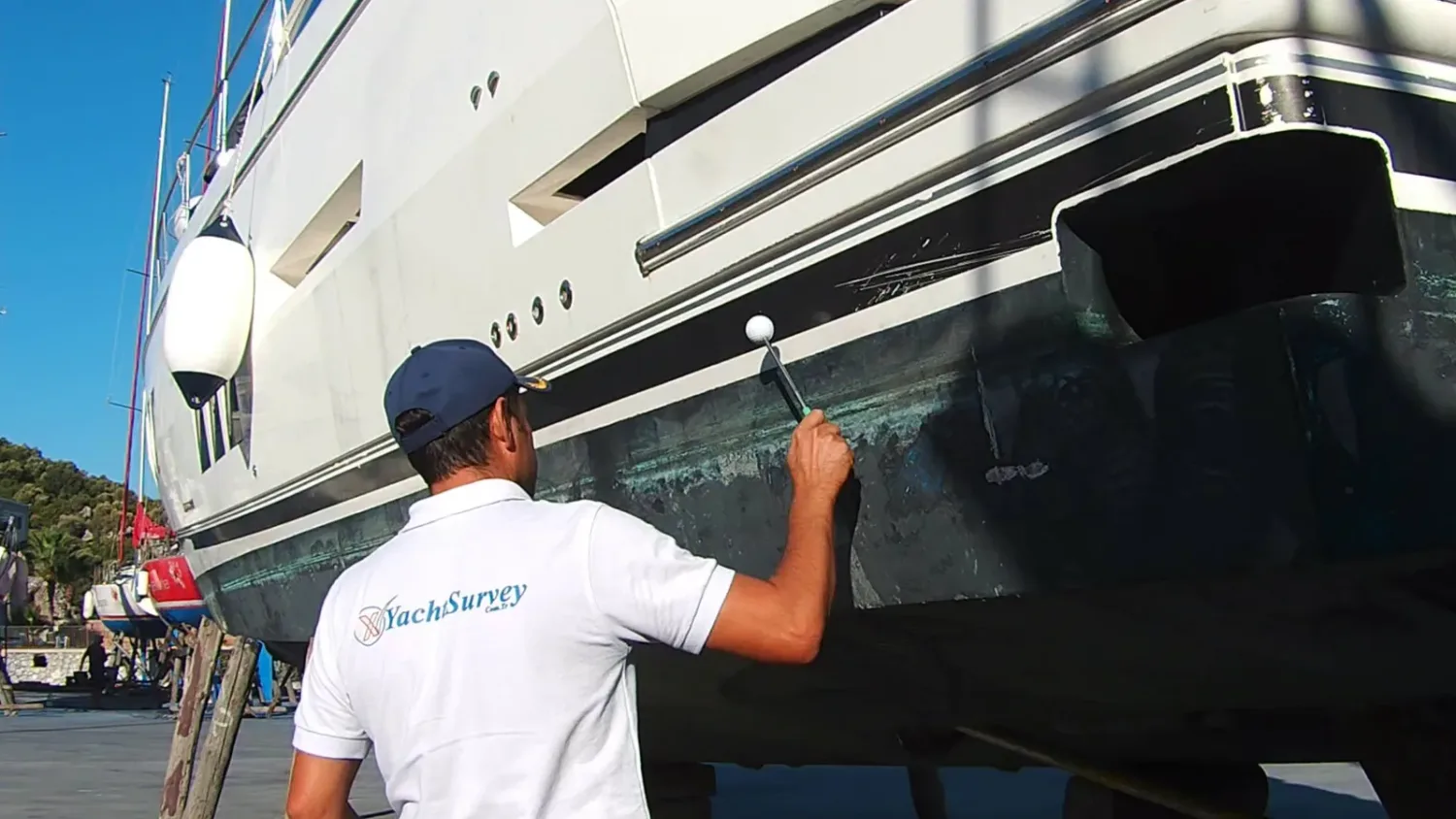
- Sounding hammer survey for delamination
- Ultrasonic thickness readings on steel and aluminium
- Osmosis graded by extent and depth
- Skin fittings, anodes and bonding tabulated
A hull survey examines the underwater hull for moisture, osmosis, delamination, thickness loss and keel-joint condition, using measuring instruments. The boat must be ashore and dry. The work takes 4-6 hours.
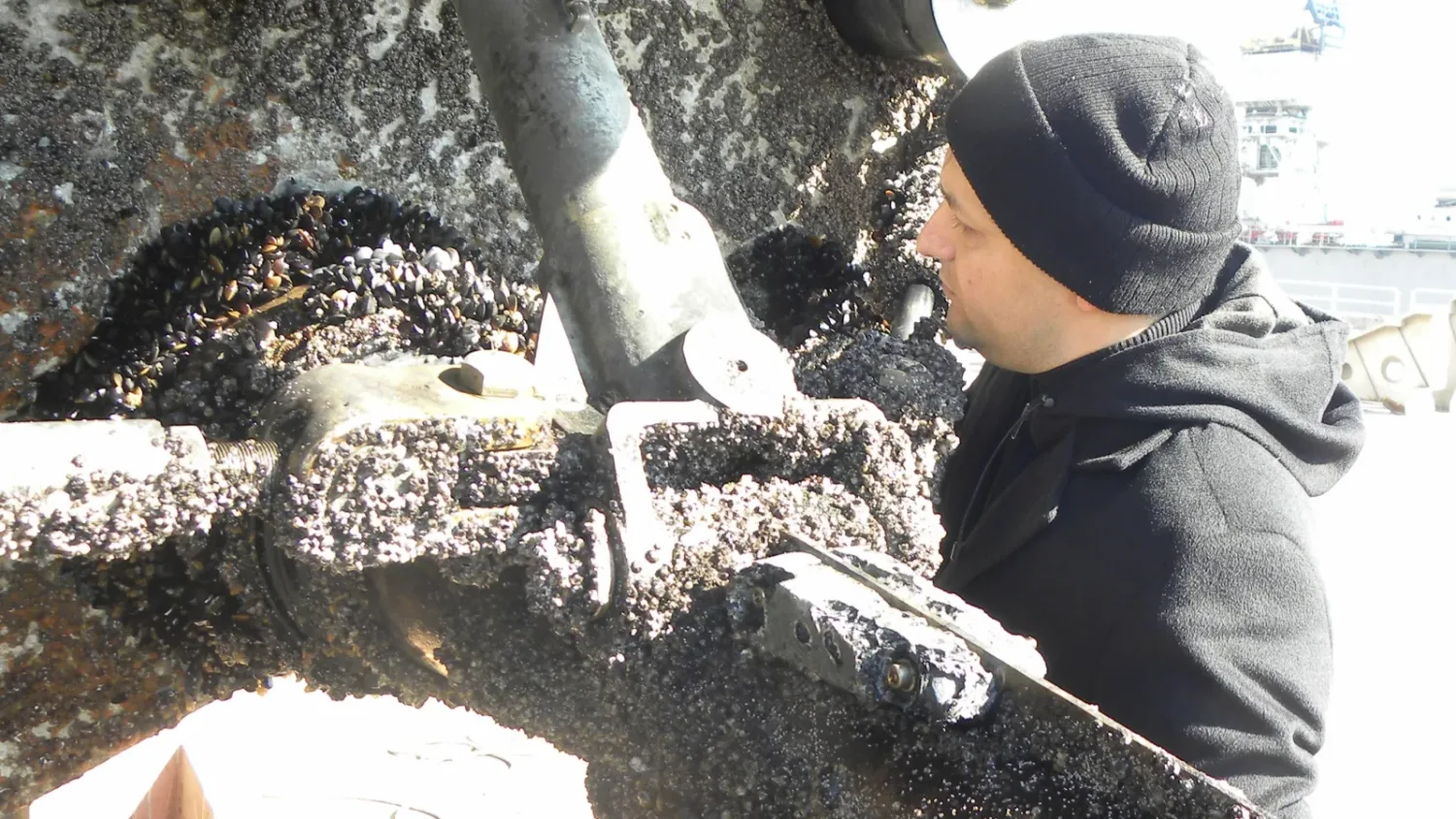
Why the underwater hull is the critical zone
The most expensive repairs a boat can present — osmosis treatment, laminate repair, keel joint rework — almost always come from below the waterline. And this is the one zone that cannot be seen at all while the vessel is afloat.
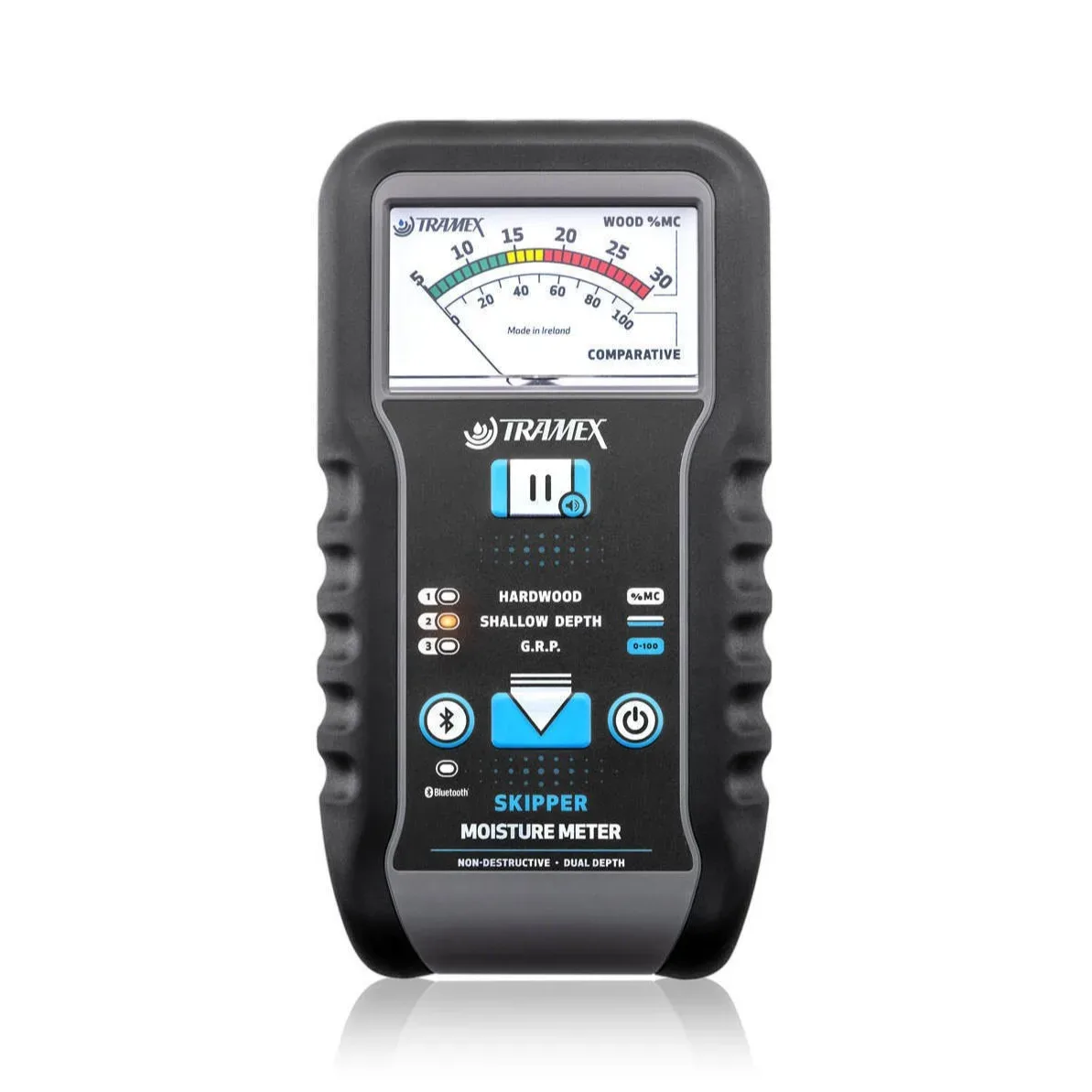
How it is examined
After haul-out and washing, the hull is scanned on a grid with the Skipper 5 moisture meter and suspect areas verified with the Wetsoon Pro; readings are mapped so the report shows whether moisture is widespread or local. Percussion testing hunts voids and delamination that leave no surface trace. On metal hulls, ultrasonic thickness measurement documents corrosion wastage and past plate repairs. Skin fittings and seacocks are operated, anodes and bonding checked, and shaft, propeller, cutless bearing and rudder stock measured for play. The keel joint and keel bolts receive particular attention.
Why measure, rather than look?
The three defects that matter in an underwater hull all advance without showing on the surface: moisture in the laminate, a debonded core and thinned plating. All three look sound to the eye, and all three are among the most expensive repairs a boat can carry.
That is why a hull survey is a scanning job. The surface is divided on a grid, a reading is taken in each cell, and the values are plotted into the report as a map. This shows whether moisture is widespread or confined to one area — the distinction that decides what the repair will cost.
The report
Moisture values with their locations; osmosis graded for extent and depth where present; every defect photographed and urgency-classed, with cost ranges for items needing repair.
Duration and fee
A hull survey takes 4-6 hours, and the osmosis test is part of that work — the two are not carried out separately and are not billed separately.
| Scope | Fee |
|---|---|
| Hull survey + osmosis test | 10 € / ft |
| Within a pre-purchase survey | No separate charge — full survey rate 26 €/ft |
On a 40 ft boat, hull + osmosis comes to 400 €.
Fees vary with the length of the boat, where she lies and the season. For a firm price call us — tell us about the boat and we will give you the number on the phone.
From the field
What this work looks like on board
8 frames
These frames were taken during real surveys. None of them are stock: each one is a measurement or a check described on this page.
Inspecting a hull hauled ashore 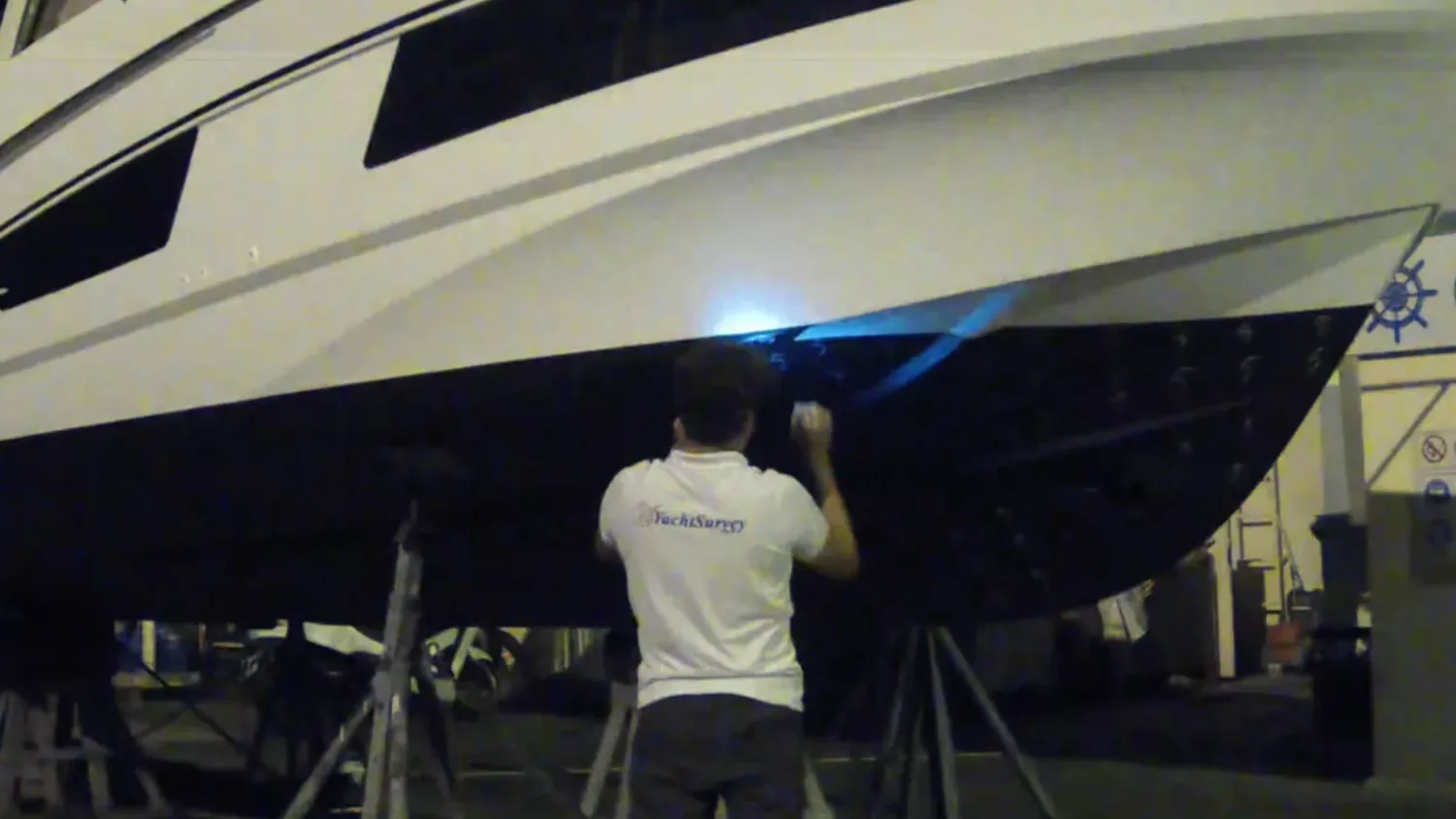
Sweeping the underside with a lamp 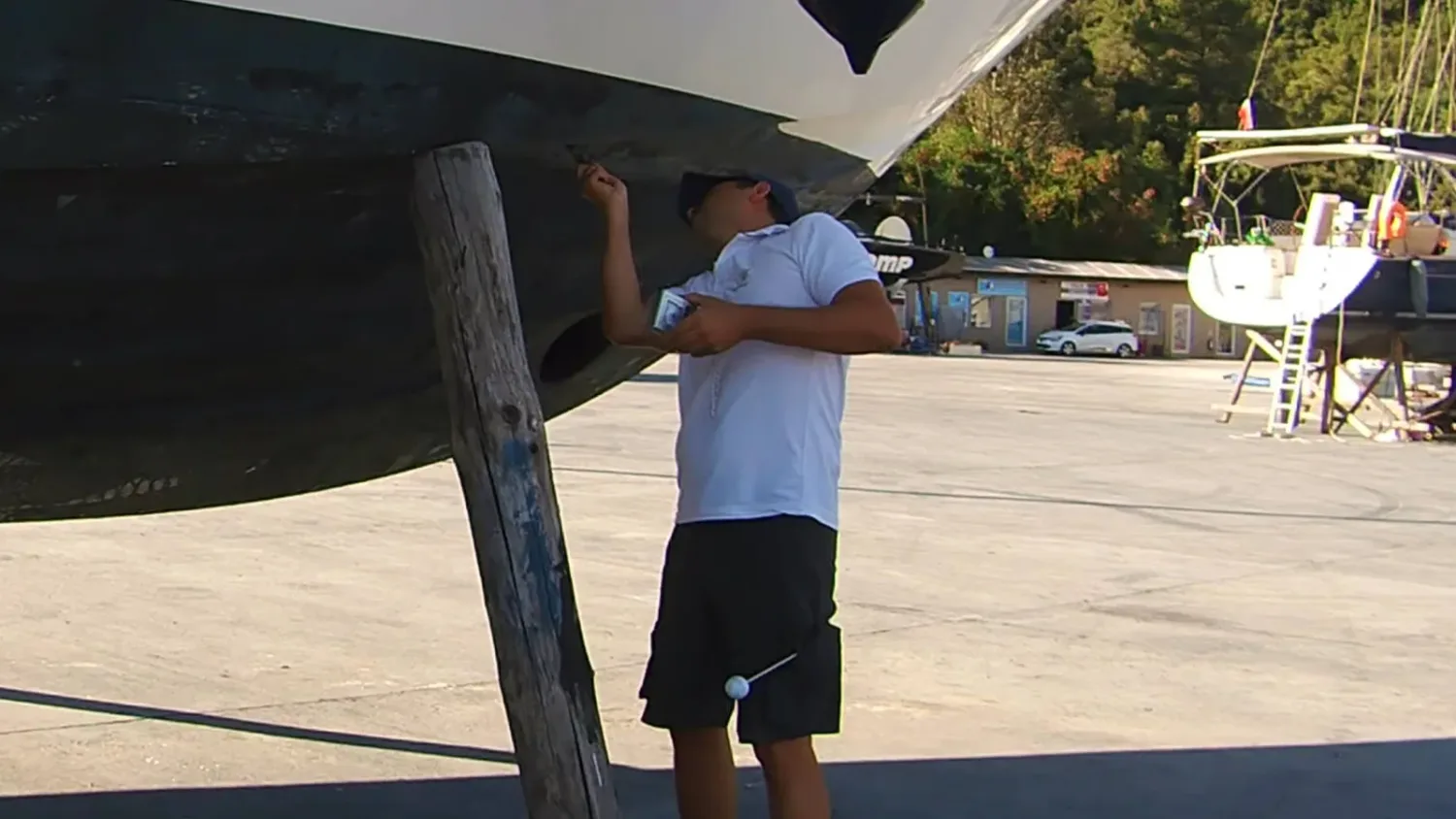
Stem and keel joint 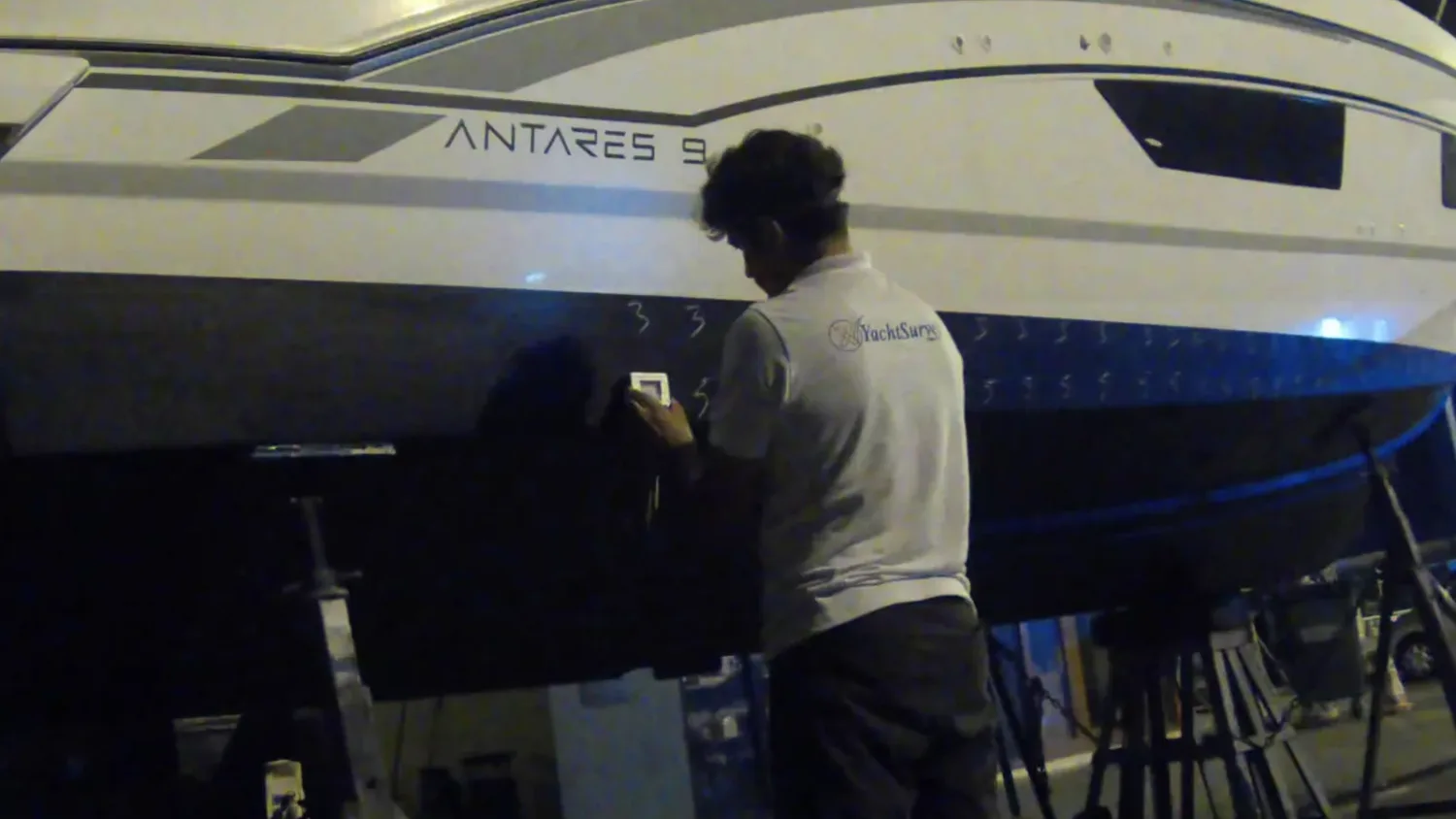
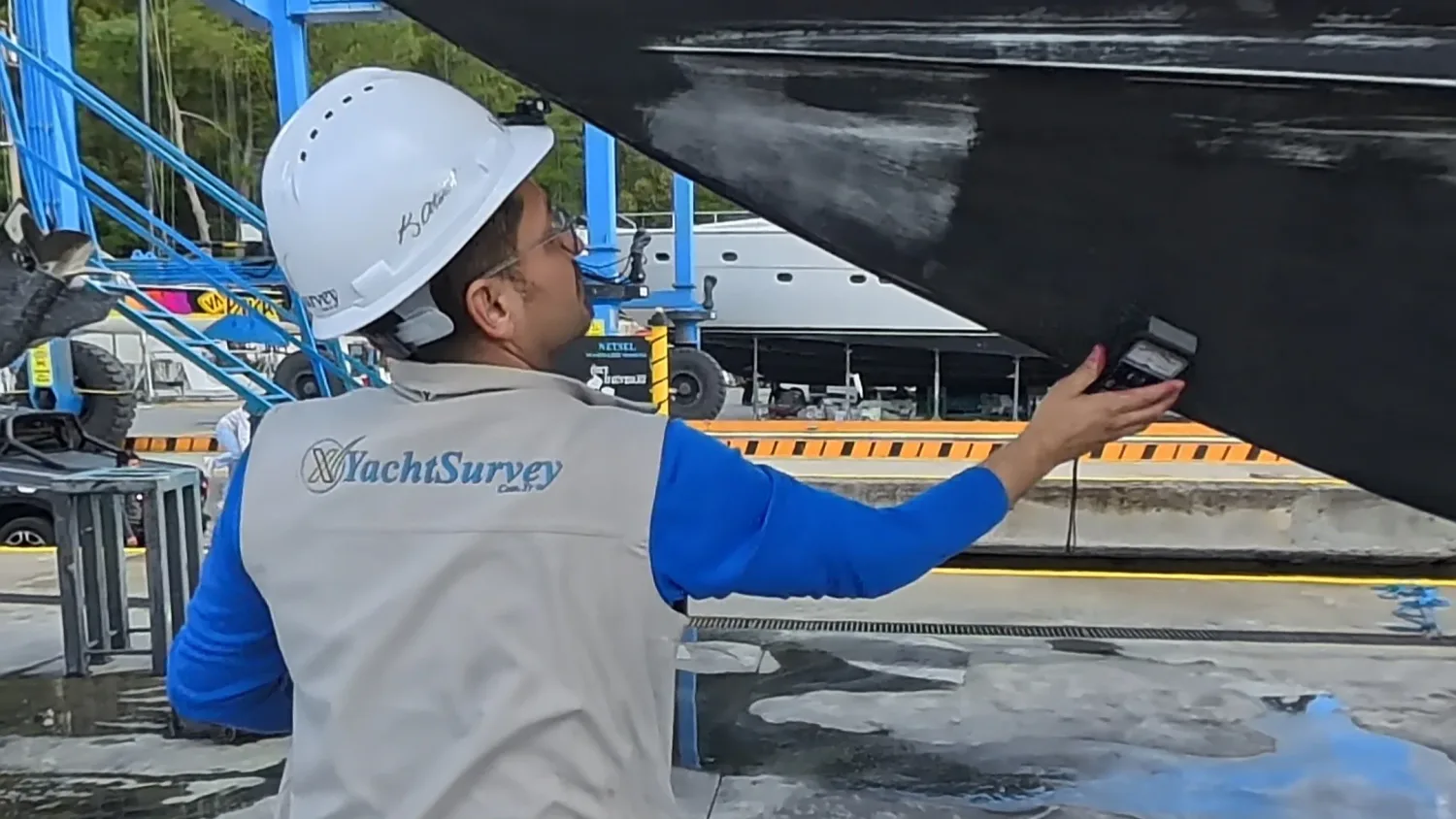
Moisture reading on the topsides 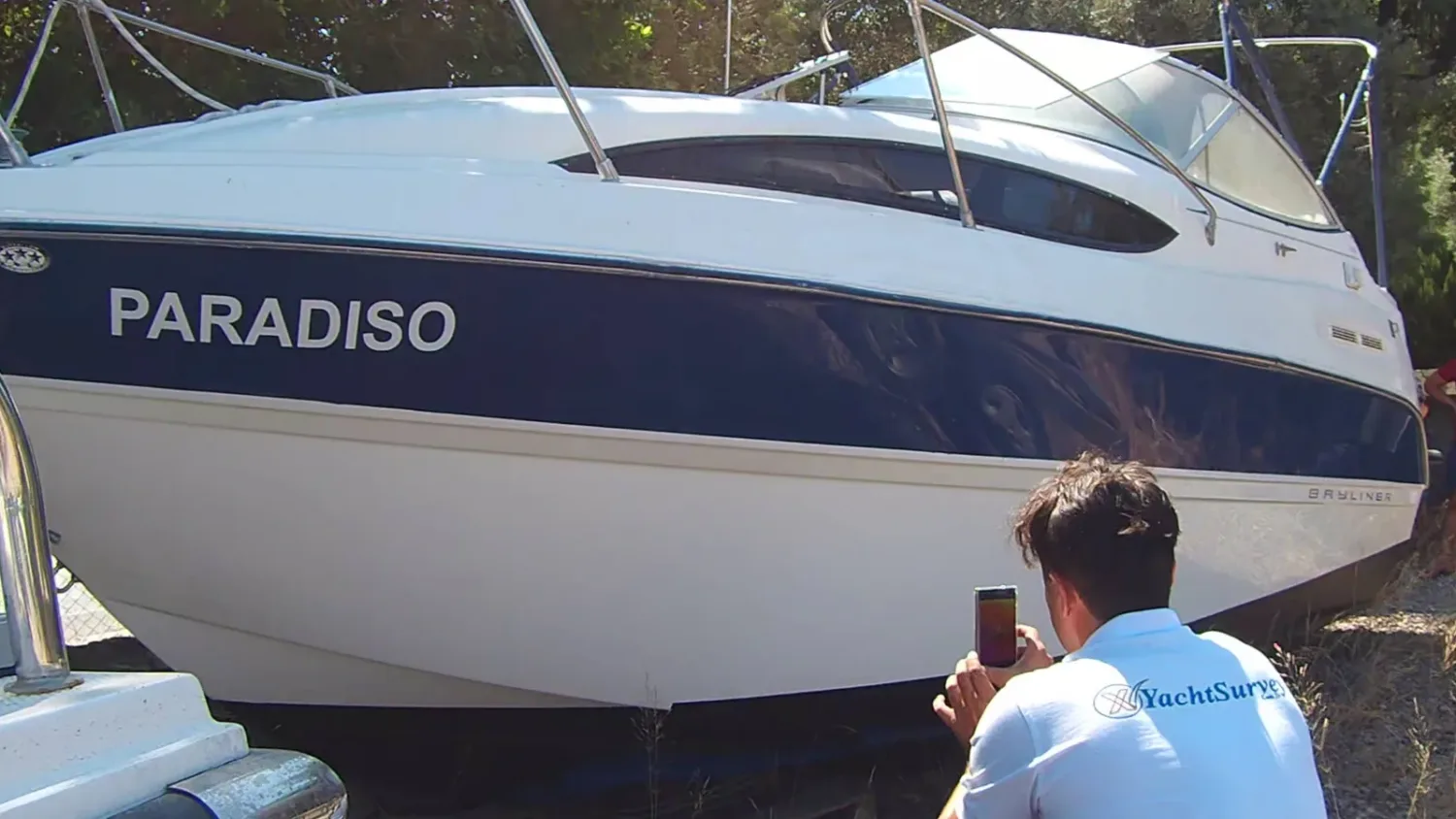
Point reading below the waterline 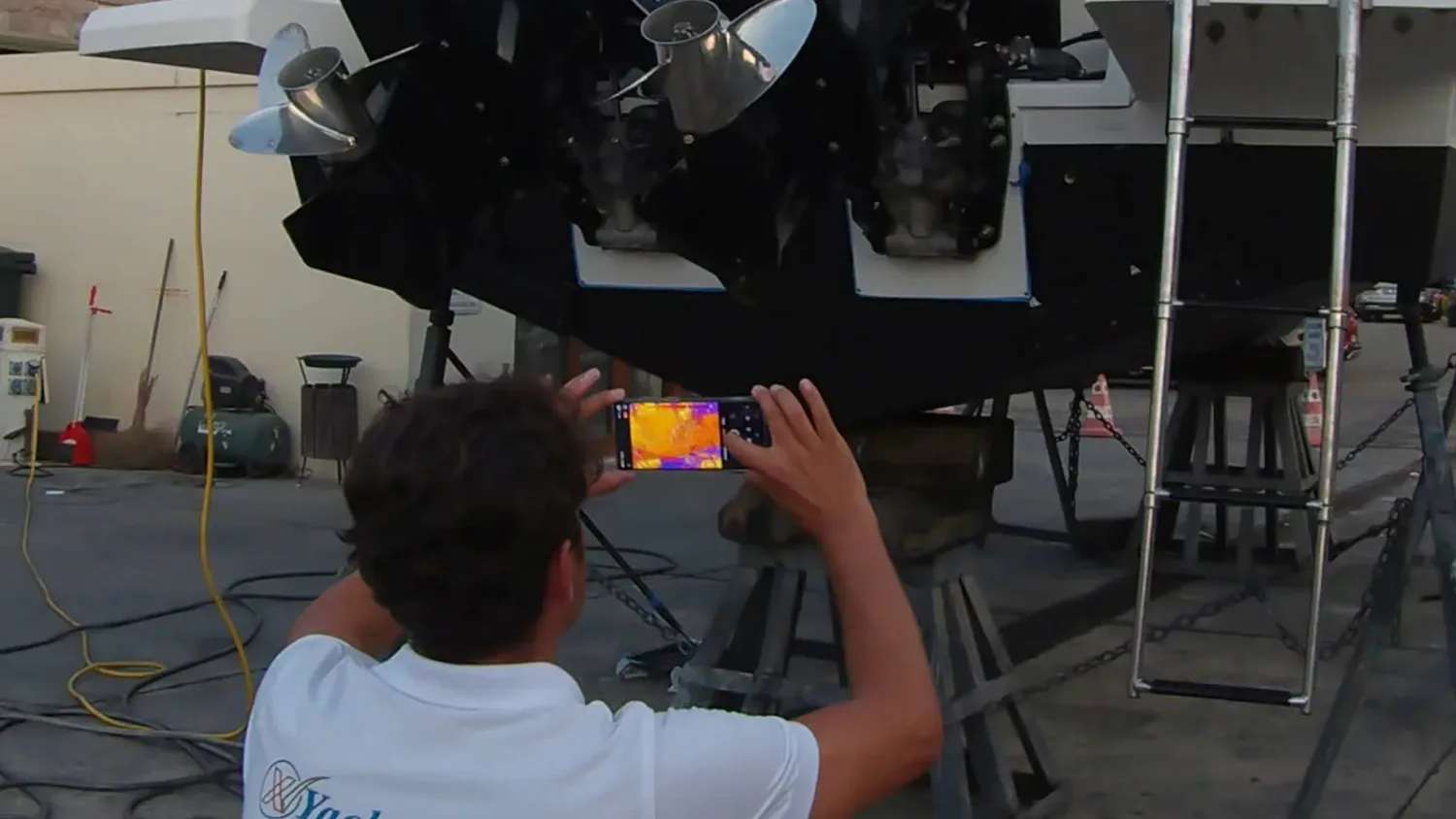
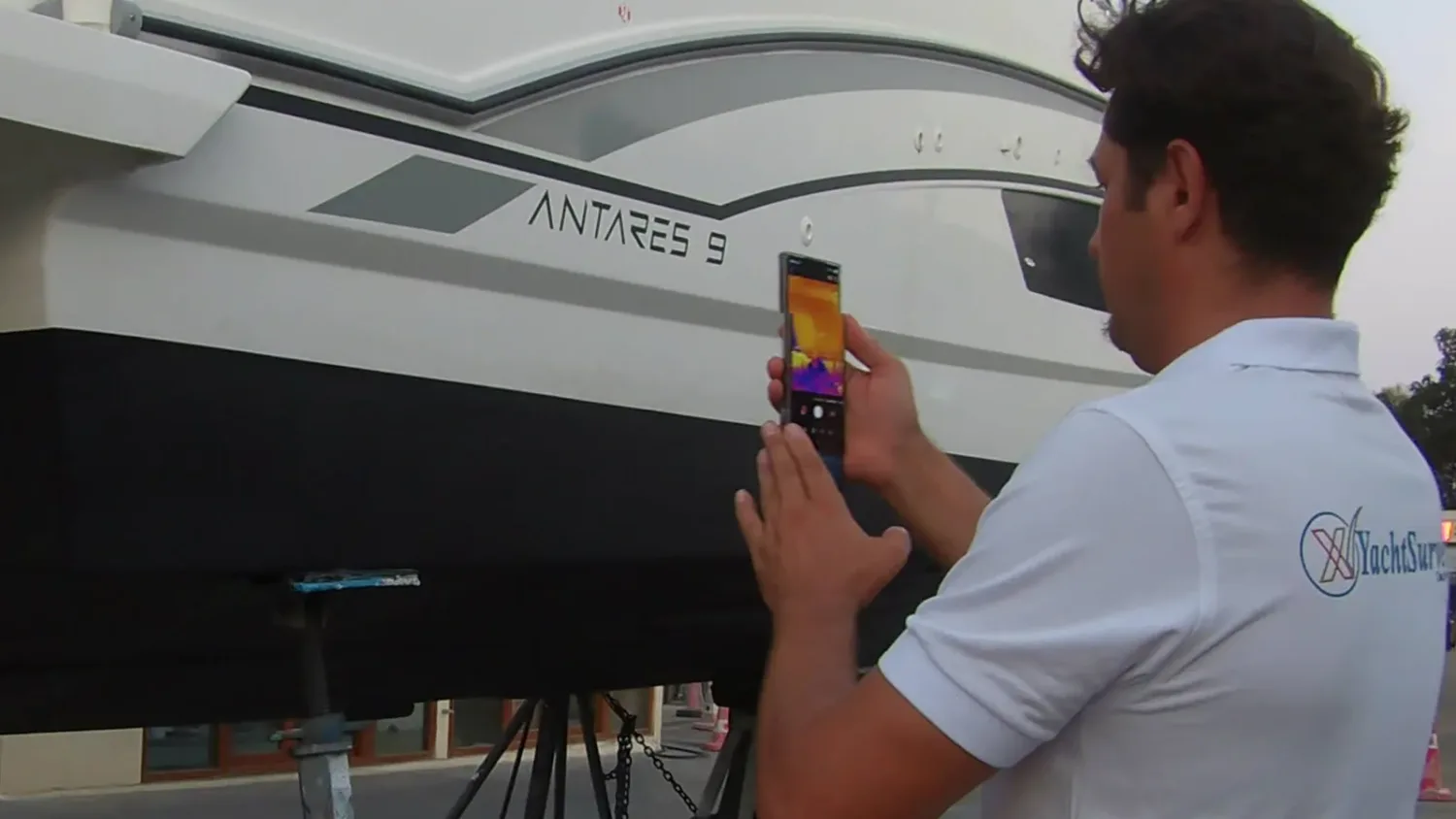
Thermal sweep of the underwater gear 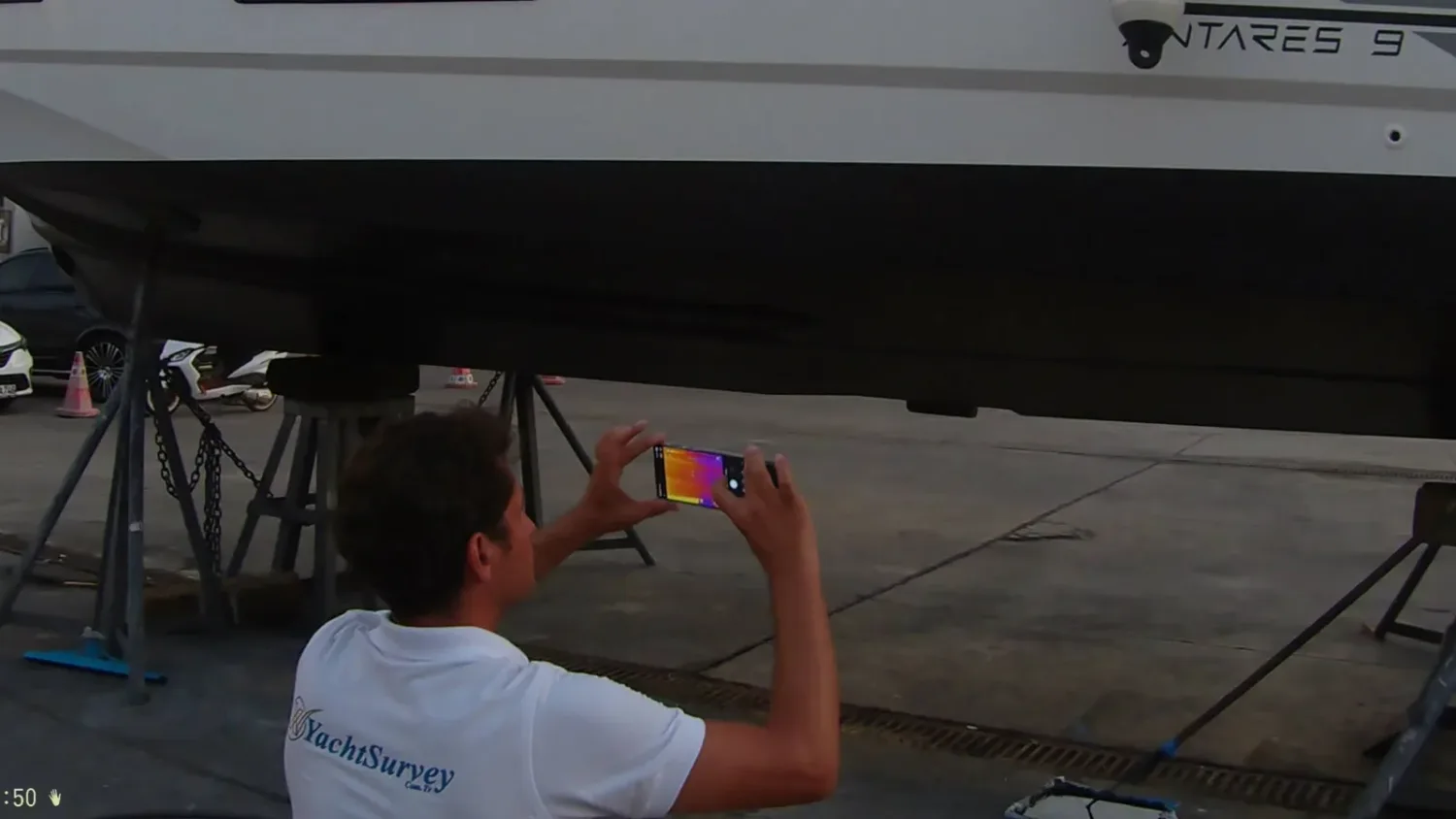
Thermal sweep ashore 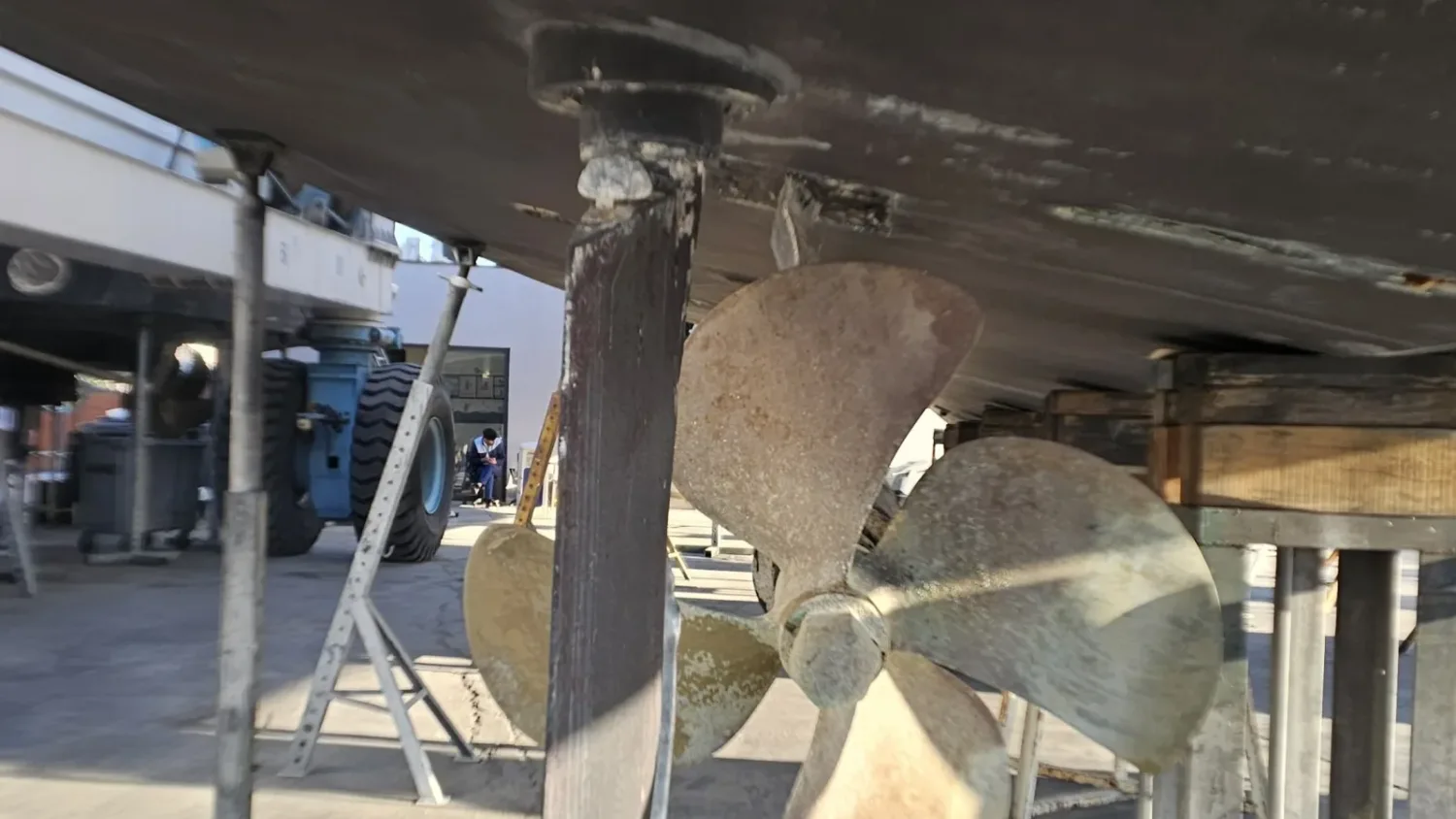
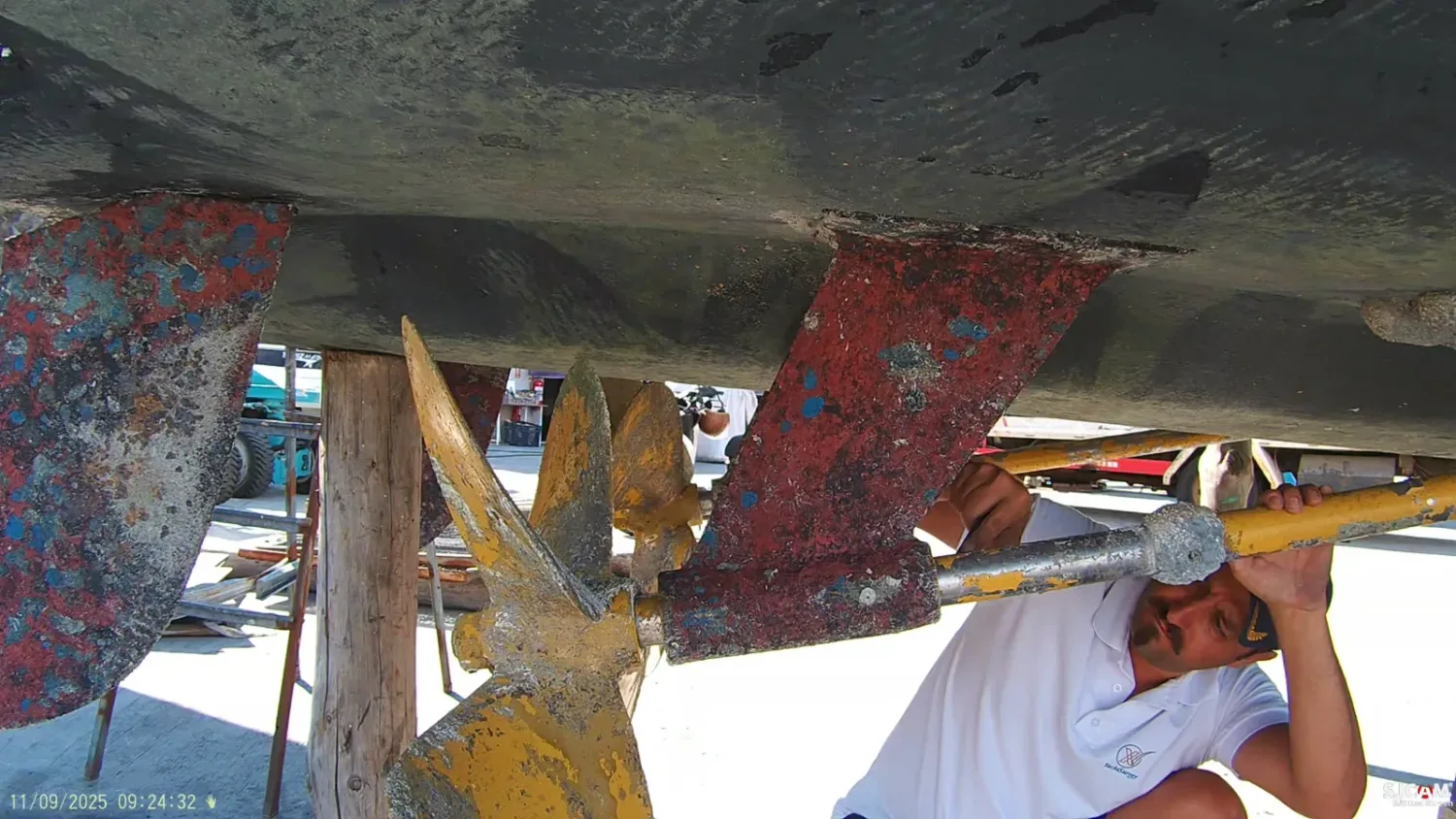
Corrosion on shaft and propeller
Frequently asked questions
Common questions
How long should the hull dry before moisture readings?
Is osmosis a reason to walk away?
What does a crack at the keel joint mean?
Services
Other services
- SURVEY
Pre-Purchase Yacht Survey
Find out what the vessel really is before you commit. An independent report backed by measured values you can use in the negotiation.
26 € / ft - SURVEY
Damage Survey
The true extent and repair cost of the damage, documented independently — a report you can put in front of your insurer.
26 € / ft - SURVEY
Yacht Valuation
The vessel's real market value, grounded in technical findings — a reasoned valuation for sale, insurance or legal use.
25 € / ft
Contact
Book your survey
Tell us where the vessel lies and your approximate date — we reply the same day.
Serkan Kotel
Yacht surveyor · IIMS · ABYC · MCA — the person who answers the phone, walks the boat and signs the report is the same person.
Phone
+905320595917Service areas
Bodrum · Yalıkavak · Turgutreis · Milas · Göcek · Fethiye · Marmaris · Datça · İstanbul · Ayvalık