
Published: 5 July 2026 · Updated: 25 August 2026
Osmosis in Yachts: Signs, Measurement and Impact on Value
From the first blister under the antifoul to the negotiating table: how osmosis is recognised, measured and priced into a used yacht.
Related service: Osmosis Test →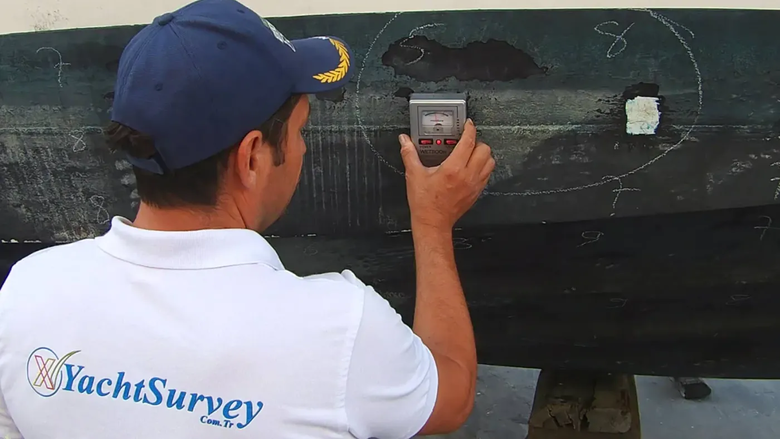
What osmosis actually is
A GRP hull is not perfectly waterproof. Over years afloat, water molecules migrate through the gelcoat and meet water-soluble compounds left inside the laminate from manufacture. The solution they form draws in more water by osmotic pressure, and the result is the familiar blister: a pocket of acidic fluid lifting the gelcoat. Caught early, this is a surface condition. Ignored, hydrolysis progresses into the laminate itself and begins to degrade the structure that keeps the sea outside.
The signs — from obvious to subtle
The classic sign is blistering below the waterline, most visible right after haul-out and often shrinking as the hull dries — which is exactly why a quick look at a dry boat misleads. Subtler signs: a pimpled texture under the antifoul, a dull note instead of a sharp one under percussion, and the tell-tale vinegar-like smell when a blister is opened. Subtlest of all is elevated moisture with no visible blistering at all — the early stage only a meter can see.
How it is measured properly
Visual inspection is cheap and misses the early stage entirely. A single moisture meter is better, but surface conditions and calibration can skew a lone reading. The method we use pairs two independent technologies: a grid scan with the Tramex Skipper 5 (impedance, reading up to 30 mm into the laminate through paint), then re-measurement of every flagged area with the analogue Wetsoon Pro. When both agree, the finding is real; when they disagree, it is investigated, not reported. The output is a moisture map — values by location — plus a grading of extent and depth. Details are on the osmosis test service page.
Two practical rules: the hull must dry 24-48 hours after washing before readings mean anything, and areas with repair history deserve the densest grid.
What repair costs
Three tiers, in rising order of pain:
- Local repair — isolated blisters opened, dried, filled and barrier-coated. A yard job measured in days.
- Epoxy barrier over a sound hull — preventive; often combined with local repairs at the borderline stage.
- Peel and re-lamination — the gelcoat (and sometimes outer laminate) machine-peeled off, the hull dried for weeks, then rebuilt with epoxy. This is the expensive scenario, measured in months and a meaningful fraction of an older boat’s value.
Which tier applies is precisely what the measurement determines — and why a €300 test routinely settles €10,000 arguments.
How it moves the price
In the Turkish market — Bodrum, Marmaris, Göcek — buyers use an osmosis suspicion directly as a negotiating lever, and an unmeasured suspicion costs the seller more than a measured finding. For buyers the logic mirrors: a documented, graded condition can be priced and managed; an undocumented one is an open-ended risk you should not carry. Either way, the moisture map is the strongest paper at the table.
Selling? Commission the test before listing; a clean map removes the lever entirely. Buying? Never rely on the seller’s assurance or a glance at a dry hull — the survey pays for itself here more often than anywhere else.